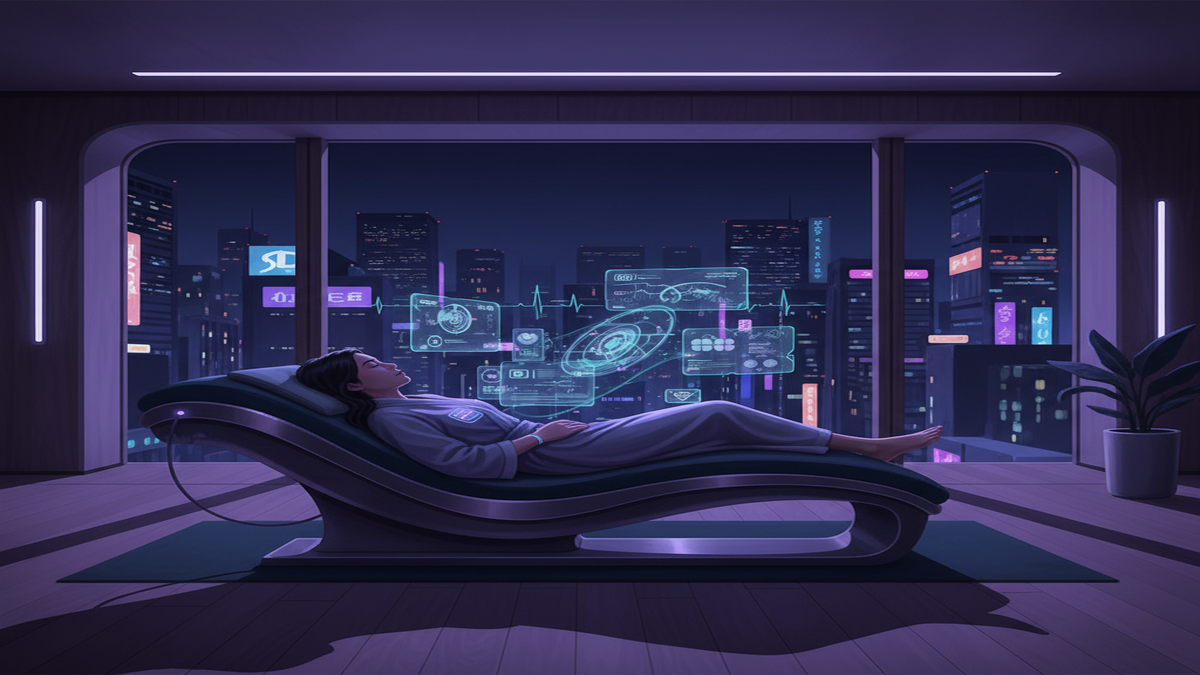
Your Next Doctor's Visit Could Be in Your Living Room
For decades, healthcare has meant a trip to the clinic, a crowded waiting room, and an appointment slot that rarely matches your schedule. What if your home could become the appointment itself? At CES 2026, South Korean health tech company Ceragem unveiled something that might reshape how Asia approaches wellness: a fully integrated home system that monitors, analyses, and responds to your health in real time. No commute. No waiting list. Just your living room, working as your personal wellness centre.
By The Numbers
- 15,000 visitors attended Ceragem's exhibition at CES 2026, double the footfall from 2025 (CES 2026)
- Over 90% reported high satisfaction with the showcase (Ceragem)
- Named in Exhibitor Magazine's Top 20 CES 2026 Exhibit Designs, the only Korean healthcare firm alongside Samsung and Amazon (Exhibitor Magazine)
- Won Best of Show Stand Awards bronze
- Three lifestyle zones designed for youth, middle age, and elderly populations
The Three Zones of Home Wellness
Ceragem's Alive Intelligence Wellness Home splits the home into three distinct spaces, each tailored to different life stages. Think of it less as a product and more as a philosophy about what a house should be for your health. The design recognises that a teenager's wellness needs look nothing like their grandmother's.
The Clarity & Recharge zone targets youth with AI-powered beds that track sleep quality while integrating emotional well-being analysis. Study booths feature brainwave analysis technology, so learning isn't just monitored but optimised in real time. The Everyday Vitality zone serves people in their 40s and 50s with therapy saunas and AI shower systems equipped with 3D scanning and fingerprint profiles for personalised wellness recommendations. Finally, the Serenity & Care zone prioritises safety and comfort for elderly residents with medical beds and thermal massagers like the Master V9, designed specifically for age-related mobility challenges.
All three zones converge at a central CERACHECK hub, which unifies health measurement, analysis, and recommendations across the home. No fragmented apps. No scattered devices. One platform that learns from every interaction.
Why Now? Asia's Urgent Wellness Crisis
Asia isn't just ageing, it's ageing rapidly. Japan has already become a super-aged society, whilst South Korea faces demographic pressures that rival Europe. Healthcare systems built for young, productive populations are straining under the weight of chronic disease management and elderly care. A single doctor's appointment can cost a full day of missed work or transport hassles that discourage preventative visits altogether.
Ceragem's vision taps into something deeper than convenience. It addresses the reality that many Asians, particularly elderly populations in rural areas, simply don't have regular access to doctors. A wellness home doesn't replace clinical care, but it can catch problems early and support management between visits. This approach resonates particularly in South Korea, where AI companion dolls have gained adoption to support elderly loneliness, signalling growing acceptance of AI-driven care solutions despite cultural reservations.
"Through CES 2026, we wanted to show how AI can evolve beyond a tool into a living companion that understands and supports users in their daily lives. Our Alive Intelligence Wellness Home will set a new benchmark where the house itself designs and completes wellness."
— Ceragem executive
The Technology Behind the Walls
Two flagship innovations stood out at the CES showcase. The Youth Bed with AI Health Concierge integrates sleep tracking with emotional well-being assessment and learning support, creating a single device that addresses multiple dimensions of youth wellness. The Home Therapy Booth 2.0 with AI Mental Coach offers something rarer: a private wellness space that uses environmental sensing and real-time response to provide mental health support.
Each device in the home feeds into the central intelligence system, building a comprehensive health profile without requiring manual logging. The AI learns preferences, patterns, and anomalies. Over time, recommendations become more targeted and relevant. The system doesn't just tell you that you slept poorly; it analyses why and adjusts bedroom temperature, light, or suggest a different bedtime routine.
| Zone | Age Group | Key Devices | Focus Area |
|---|---|---|---|
| Clarity & Recharge | Youth | AI-powered bed, brainwave study booth | Sleep, learning, emotional balance |
| Everyday Vitality | 40s to 50s | Therapy sauna, AI shower system with 3D scanning | Preventative care, wellness routine |
| Serenity & Care | 70s+ | Medical bed, Master V9 thermal massager | Mobility, comfort, safety monitoring |
Recognition from the Design World
The exhibit didn't just impress visitors. Industry bodies took notice. Ceragem secured placement in Exhibitor Magazine's Top 20 CES 2026 Exhibit Designs and claimed a bronze award in the Best of Show Stand Awards category.
"Being selected for the 'Top 20 Exhibit Designs at CES 2026' represents recognition of both Ceragem's space-based healthcare vision and our exhibition capabilities."
— Ceragem official statement
That recognition matters because it signals that wellness technology doesn't have to feel clinical or cold. Ceragem's approach treats the home as a design canvas, not a medical warehouse. The question they're answering isn't just "how do we monitor health" but "how do we make a home healthier for everyone inside it?"
The Broader Picture: AI Wellness Across Asia
Asia is already experimenting with AI-driven health solutions. In Taiwan, the government rolled out an AI health coach through the National Health Insurance Administration in partnership with Google, providing preventative guidance at scale. In China, companies are exploring AI grief technology and digital legacy tools. Across the region, AI therapy apps are tackling cultural stigma around mental health, with mental health chatbots and other digital interventions gaining traction despite persistent reservations about seeking psychological support offline.
Yet there's a difference between scattered AI health tools and an integrated home system. Ceragem's model treats the home itself as the healthcare provider, not the technology within it. Tencent WeChat in China is moving in this direction too, integrating AI symptom checkers and triage tools into its network. The trend is clear: healthcare is moving from appointments to always-on, home-based surveillance and support.
What kind of wallpaper should go into a child's room? What materials make a home healthier for children? Ceragem exists to answer those questions, moving beyond device functionality into environmental design.
Key Features at a Glance
- Central CERACHECK hub unifying all health data and recommendations across zones
- Brainwave-enabled study environment for youth learning optimisation
- 3D scanning and fingerprint profiling in shower systems for personalised wellness routines
- AI Health Concierge integrating sleep, emotional well-being, and learning support
- AI Mental Coach in private wellness booth with environmental sensing and real-time response
- Master V9 thermal massagers designed for elderly mobility and comfort
- Medical-grade beds with continuous health monitoring capabilities
Related Reading
Asia's growing investment in AI companions, the emerging risks of AI mental health chatbots in Asia.
Your Questions Answered
Will a wellness home cost more than regular healthcare?
Initial installation costs will be high, as with most integrated home technology. However, the long-term value lies in preventative care and early detection, potentially reducing expensive clinic visits and hospital admissions. Pricing has not been officially announced.
Can the system replace a doctor?
No. The Alive Intelligence Wellness Home is designed to complement clinical care, not replace it. It can flag potential health issues early and support disease management between appointments, but diagnosis and treatment remain the domain of qualified healthcare professionals.
What happens to my health data?
Data privacy will be critical, particularly in Asia where concerns about surveillance are heightened. Ceragem has not yet detailed specific data governance policies, but this is a question users should press before adoption.
When can I buy one?
The CES showcase was a proof of concept. Commercial availability, pricing, and installation timelines have not been announced. Expect several years of refinement and regulatory approval, particularly in healthcare markets.
Will it work in small apartments?
The three-zone design assumes substantial space. Ceragem has not yet addressed how the system might be adapted for compact homes, which is a significant limitation in Asia's densely populated cities.
The Healthcare Home You Didn't Know You Needed
Healthcare has always been reactive. You get sick, you go to the doctor. You develop a chronic condition, you manage appointments around your life. What Ceragem is proposing is an inversion: the home monitors proactively, analyses continuously, and responds before you even realise something's amiss. For Asia's rapidly ageing populations, that shift could be transformative. A wellness home doesn't solve healthcare shortages or eliminate the need for doctors, but it does give millions of people access to continuous, personalised health support without leaving their living room. In a region where population ageing is both a crisis and an opportunity, that matters. Drop your take in the comments below.