Why Each AI Chatbot Has Its Own Distinctive Writing Style
Somewhere between human flair and algorithmic pattern lies an AI’s signature voice
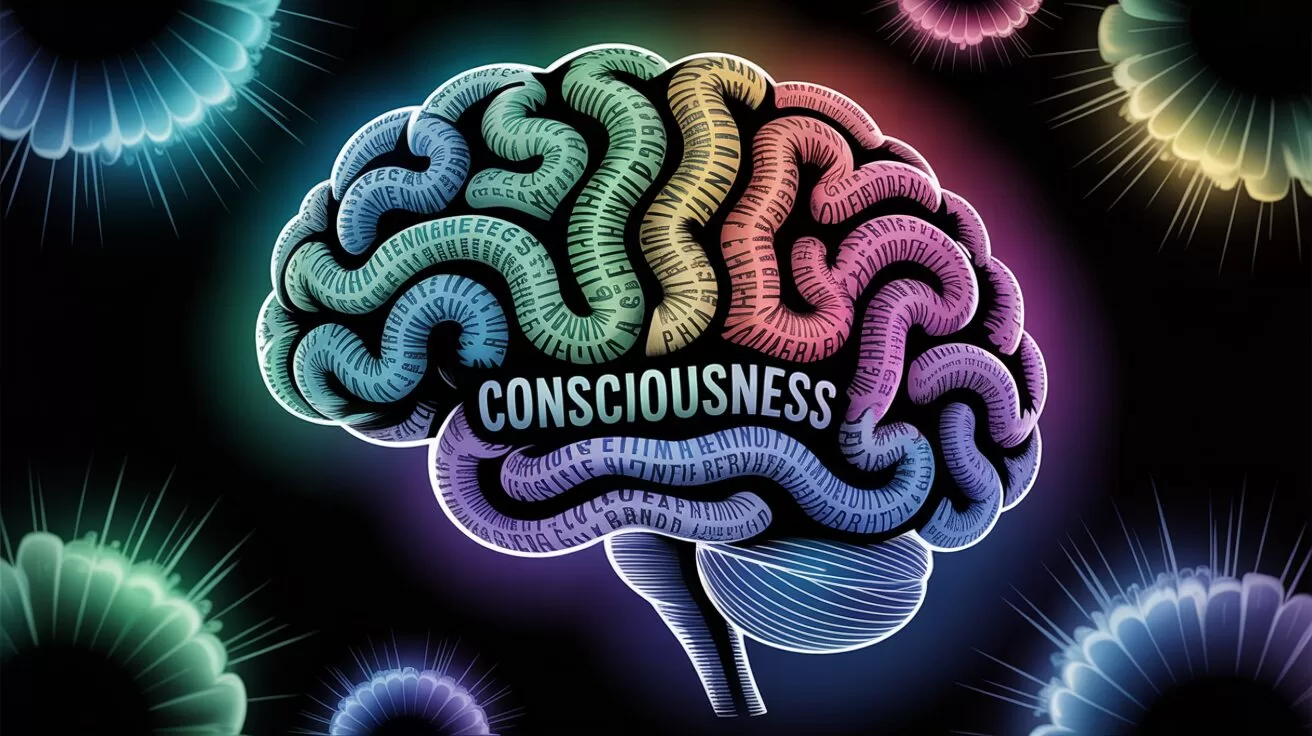
When you chat with GPT‑4 or Gemini, does it feel like you are speaking to a person with a consistent character? Or does each reply come from a slightly different ‘voice’? Recent forensic linguistic work reveals that, yes, AI chatbots themselves develop what linguists call an idiolect: a distinctive writing style rooted in trained habits and preferences.
AI idiolects are real. Analysis comparing ChatGPT and Gemini essays on diabetes shows each has its own measurable writing style.,Distinctive word patterns. ChatGPT favours formal, clinical trigrams such as “blood glucose levels”; Gemini opts for conversational phrases like “high blood sugar”.,Implications for education and AI design. Identifying idiolects bolsters efforts in plagiarism detection, model tracking and assessing AI’s march towards human-level intelligence.
Understanding Idiolect in Chatbots
In everyday speech, everyone has a unique idiom shaped by their background, including dialect, education and favourite expressions. That individual signature is an idiolect, something forensic linguists use to trace authorship in texts or spoken language. Similarly, AI models, trained on vast text corpora, exhibit consistent habits that can be measured.
A linguist compared hundreds of short, similarly sized essays on diabetes generated by both ChatGPT and Gemini. Applying the Delta method, a forensic-style technique designed by John Burrows, the researcher calculated linguistic “distances” between written samples. A Delta score near 1 indicates a text is likely from the same author, while higher distances suggest different stylists.
Using this method, a 10 percent sample of ChatGPT’s essays scored 0.92 against ChatGPT’s full set but 1.49 against Gemini’s. Gemini scored 0.84 against its own sample and 1.45 against ChatGPT’s. These figures confirm statistically that each system writes with its own idiolect.
The Tale of Trigrams
To understand how these idiolects manifest, the researcher examined the most common three-word combinations, or trigrams, in each chatbot’s output. Patterns emerged:
ChatGPT gravitated to formal, almost clinical phrasing:
- “individuals with diabetes”,“blood glucose levels”,“the development of”,“characterized by elevated”,“an increased risk”
“the way for”,“the cascade of”,“is not a”,“high blood sugar”,“blood sugar control”
Importantly, ChatGPT used glucose more than twice as often as sugar, while Gemini flipped that ratio — choosing sugar far more frequently. Even when familiar with “blood glucose levels,” Gemini preferred everyday phrasing like “high blood sugar,” underscoring a contrasting stylistic identity.
How Do These Idiolects Emerge?
There are several plausible explanations:
Why Chatbot Idiolects Matter
This finding is more than linguistic curiosity:
AI authentication. Schools and publishers struggling with AI-generated content can use idiolect analysis to infer which model authored a text. This aids detection.,Model accountability. Developers can track stylistic shifts across model versions or fine-tuning. This helps ensure consistency and guards against unintended voice changes.,Measuring AI intelligence. Did we merely create word predictors, or distinct ‘personalities’? If models craft signature styles, we may be a step closer to AI displaying individual-like traits.
In practical terms, identifying a text as ChatGPT versus Gemini could guide educators. If a student hands in a textbook-tone essay from ChatGPT, it feels different than a conversational one from Gemini.
Broader Implications and Regional Context
In Asia’s education systems — from Singapore HSCs to India’s JEE — AI-generated essays are becoming harder to spot. Linguistic detection tools that rely on idiolects may help gatekeepers tell if the text genuinely comes from the student. In commercial applications, such as chatbots servicing customers in Japan, Thailand or Australia, brands may seek to mirror their local tone, whether formal or friendly. Knowing how each model writes enables better tone-matching, improving user trust.
Looking Ahead
This research opens compelling questions:
How stable are these idiolects? Did ChatGPT express this style in its 3.5 release? Will GPT-5 write differently?,Can models be stylistically tuned? Imagine instructing a model to adopt a “newsroom style” or “youth-oriented tone.” Could this reshape its linguistic fingerprint?,Do multilingual idiolects exist? In Asia’s multilingual societies, do models favour different idiolects based on language? Is ChatGPT in Japanese more formal than in English?
Thinking Like a Linguist, Not Just an Engineer
The discovery of idiolects in AI invites us to see chatbots not merely as tools, but as agents with discernible writing identities. That has real-world resonance for educators, journalists, businesses and regulators. Are we analysing machine-made prose, or engaging with emerging personalities born from code and corpus?
Analysing AI this way combines rigorous forensic technique with nuanced reading. It reminds us that, even as machines automate writing, human concepts of voice and character remain vital. When a chatbot ‘sounds’ like ChatGPT or Gemini, that matters; and will shape how we design, trust and respond to those systems. For more on how AI is impacting various aspects of life, consider exploring Adrian's Angle: AI in 2024 - Key Lessons and Bold Predictions for 2025. You might also find this study on computational stylometry insightful: J. Burrows, 'Delta': a measure of stylistic difference and a guide to doubtful authorship.
Over To You
As we uncover each model’s idiolect, we must ask: should we preserve these digital voices or flatten them for uniformity? And in doing so, are we charting a path towards AI that feels more human or simply safe?
What do you think? If you had to pick a chatbot style to represent your voice or brand, which would you choose, and why?
YOUR TAKE
We cover the story. You tell us what it means on the ground.
What did you think?
Share your thoughts
Be the first to share your perspective on this story