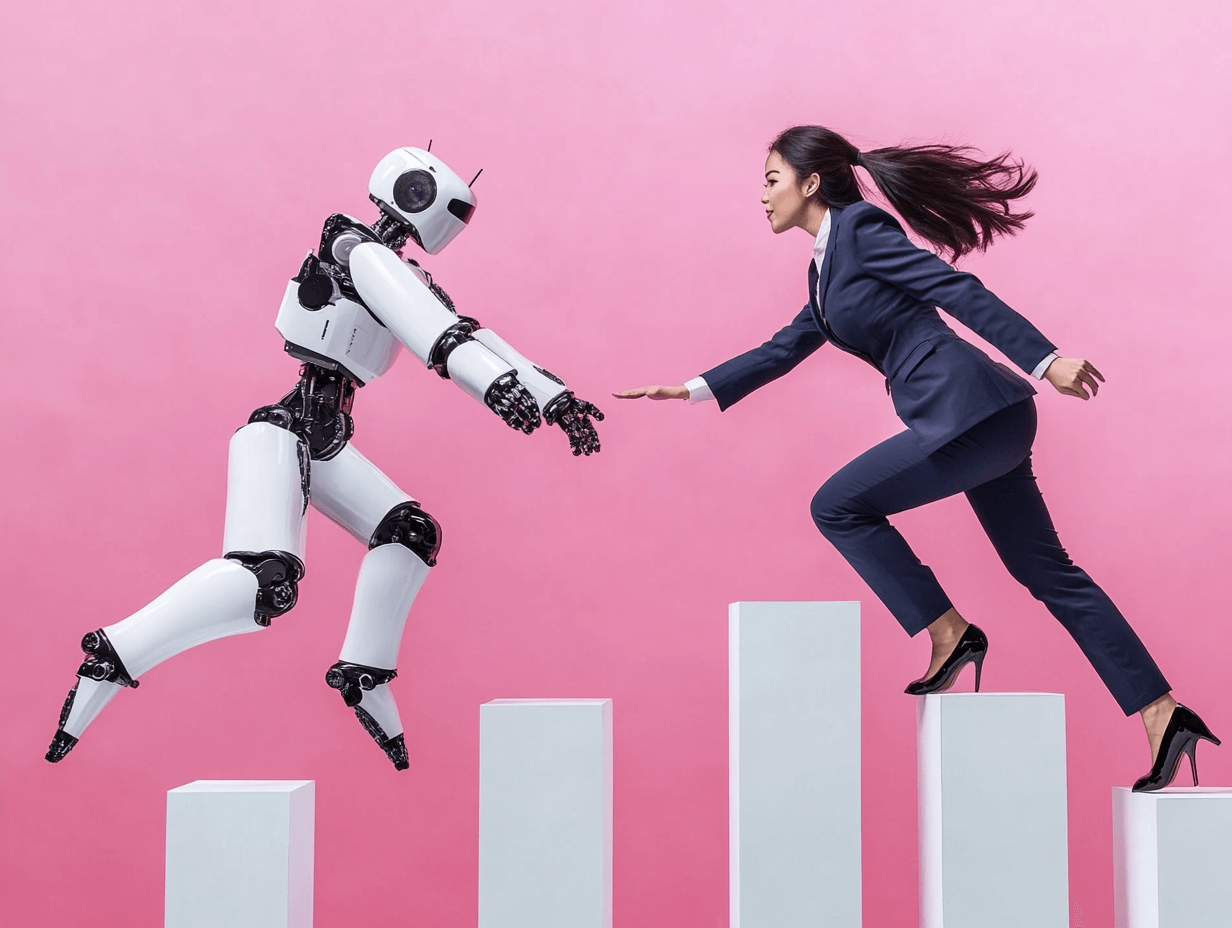
Only 43% of Singapore executives have adopted necessary technologies for employees.,36% of executives rate their teams' creativity and innovation skills as poor.,AI is a tool for growth, not a replacement for human workforces.
Artificial Intelligence (AI) is changing the way we work and live. However, a new report reminds us that AI is not the ultimate solution for workplace challenges. The 2024 Kelly Global Re Report reveals that while executives are turning to AI and automation, they struggle to implement digital strategies effectively. Let's dive into the findings and understand how AI can empower Asia's workforces.
The State of AI in Singapore's Workplaces
Singapore, like many other countries, faces workplace challenges. These include productivity and skills gaps. According to the report:
Only 38% of executives are confident in their organisation's ability to become more productive.,36% rate their teams' creativity and innovation skills as poor.,57% cite addressing this skills gap as a high priority.
Employees also have their frustrations:
33% cite a lack of career progression.,31% mention a lack of skills development.,30% are concerned about a lack of autonomy over how they work.,36% disagree that they have a satisfactory work-life balance.
AI: A Tool for Growth, Not a Panacea
Pete Hamilton, vice president and managing director, APAC, at KellyOCG, reminds us that AI is not the endgame. He states:
"AI is a tool that can significantly accelerate business growth. It has the potential to increase our power to build exceptional workforces and understand what it takes to enable them to thrive."
"AI is a tool that can significantly accelerate business growth. It has the potential to increase our power to build exceptional workforces and understand what it takes to enable them to thrive."
So, how can AI empower employees and address workplace challenges? For more on how other Asian nations are handling the shift, read about Taiwan’s AI Law Is Quietly Redefining What “Responsible Innovation” Means.
Utilising AI Properly
The report surveyed 1,500 senior executives and 4,000 employees across 13 countries, including Singapore. It provides recommendations on implementing AI effectively:
Demonstrate AI's Benefits: Show how AI can empower employees to do more rewarding, value-creating work.,Provide Timely Training: Offer training on new AI systems to enable employees to capitalise on the technology.,Involve Employees: Include employees in the design and deployment phases of new AI and digital systems.
AI and AGI in Asia: The Future
AI and Artificial General Intelligence (AGI) are set to revolutionise Asia's workplaces. However, it's crucial to remember that these technologies should augment, not replace, human capabilities. For insights into how this is playing out across the region, explore APAC AI in 2026: 4 Trends You Need To Know. Here's what the future could look like:
Upskilling and Reskilling: AI can help identify skills gaps and provide personalised training to employees. This aligns with Singapore's proactive approach, as Singapore wants its workforce to be AI bilinguals.,Increased Productivity: AI can automate repetitive tasks, freeing up employees' time for creative and strategic work.,Better Decision Making: AI can provide data-driven insights to aid in decision-making processes.
Comment and Share:
What are your thoughts on AI in the workplace? How would you like to see AI implemented in your job role? Share your experiences and ideas in the comments below. Don't forget to Subscribe to our newsletter for updates on AI and AGI developments. For further reading on the impact of AI on the global workforce, you might find this report from the World Economic Forum insightful: The Future of Jobs Report 2023.