
Your Language Teacher Now Lives in Your Phone
Learning a new language used to mean textbooks, classrooms, and awkward role-play exercises with fellow beginners. In 2026, it increasingly means talking to an AI that never loses patience, never judges your pronunciation, and is available at 3am when you suddenly feel motivated to practise Mandarin.
The shift is happening fastest in Asia-Pacific, which now accounts for 32.9% of the global language learning market, the largest share of any region. The online language learning market is projected to grow from $22.86 billion in 2025 to $27.45 billion in 2026, a 20% year-over-year jump driven largely by AI-powered features that make apps feel less like software and more like conversation.
Why Asia Is the Epicentre
Three forces are converging. First, smartphone penetration across India and Southeast Asia has put a language tutor in hundreds of millions of pockets. Second, 5G rollout makes voice-based AI tutoring smooth enough to feel natural. Third, the economic incentive is enormous: English proficiency remains a career accelerator across the region, while Mandarin, Japanese, and Korean attract growing interest from business professionals and pop culture fans alike.
Speak, the AI-first language learning app, hit a $1 billion valuation largely on the back of explosive growth in South Korea and Japan. The app has reached 10 million registered users by focusing on what traditional apps got wrong: spoken fluency over grammar drills. Its AI conversation partners adapt in real time, adjusting vocabulary and speed based on the learner's level.
"The companies that figure out voice-first AI tutoring will own the next generation of language education. Text-based learning is already a legacy format for most Asian users under 30." - Luis von Ahn, CEO, Duolingo
By The Numbers
- 32.9%: Asia-Pacific's share of the global language learning market in 2025, the largest of any region
- $27.45 billion: Projected global online language learning market in 2026, up 20% from 2025
- $1 billion: Speak app's valuation, driven primarily by South Korean and Japanese users
- $9.1 billion: China's language learning market value in 2025
- 11%: Annual growth rate of Southeast Asia's language learning market
What the AI Actually Does Differently
Duolingo has integrated AI features that go well beyond its familiar gamified lessons. The app now offers on-the-fly correction during spoken exercises, voice-based interactive scenarios with animated characters, and personalised lesson paths that adapt to individual weaknesses. These features are powered by large language models that can hold natural conversations rather than following rigid scripts.
The result is a learning experience that starts to resemble immersion, the method that language researchers have long agreed works best, but which previously required actually living in another country.
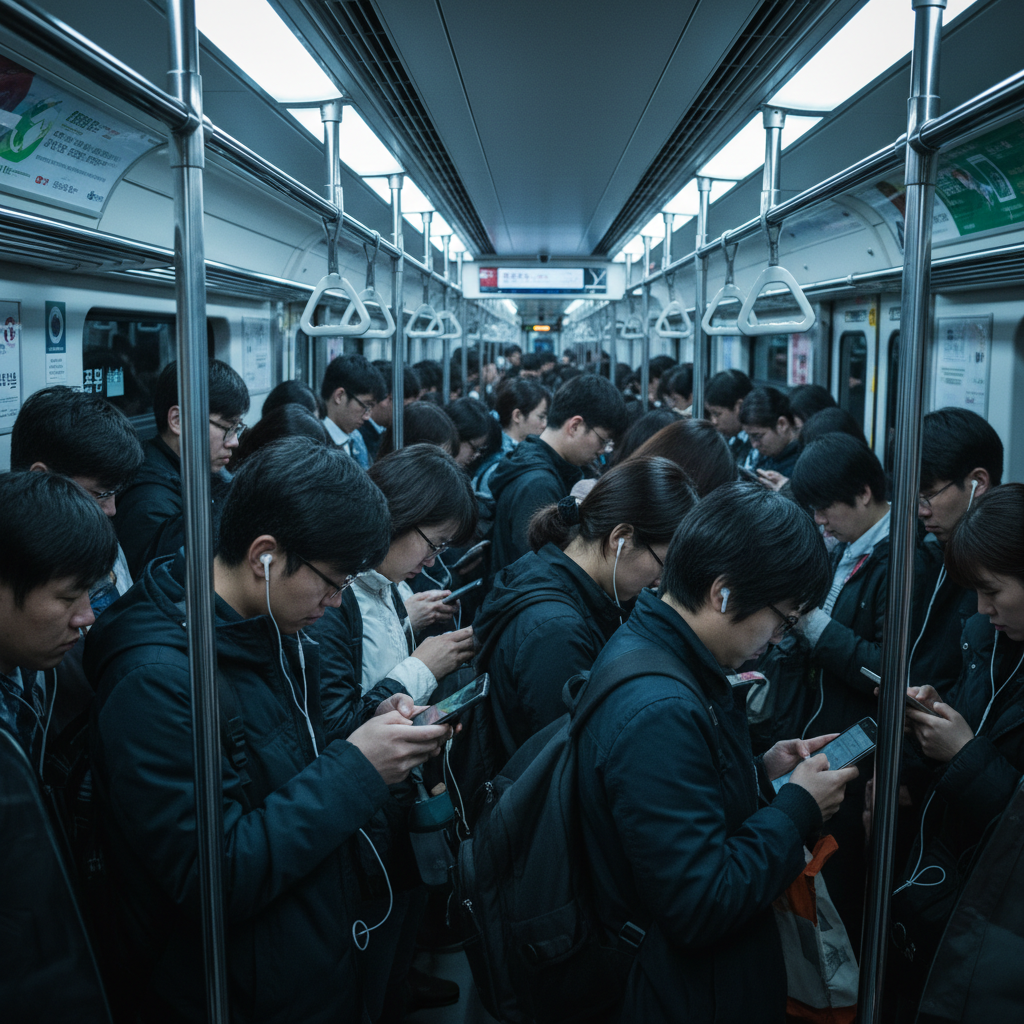
"AI-driven personalisation is fundamentally changing how people acquire languages. The technology can now identify a learner's specific weaknesses within minutes and adjust the entire curriculum accordingly." - Dr Yun Shin Park, Director of Applied Linguistics, Seoul National University
The Classroom Is Not Dead, But It Is Shrinking
Traditional language schools across Asia are feeling the pressure. In Japan, the eikaiwa (English conversation school) industry has been declining for years, and AI tutoring is accelerating that trend. In China, the government's 2021 crackdown on private tutoring pushed millions of learners online, where AI-powered platforms were waiting.
But AI tutoring has limits. It excels at pronunciation, vocabulary, and conversational practice. It struggles with cultural nuance, humour, and the kind of unstructured social interaction that makes language learning stick. The best outcomes still combine AI practice with human connection, whether that means a weekly class, a language exchange partner, or simply living somewhere the language is spoken.
| Platform | AI Feature | Key Asian Market | Strength |
|---|---|---|---|
| Speak | Real-time voice AI conversation | South Korea, Japan | Spoken fluency focus |
| Duolingo | Adaptive AI lessons, voice scenarios | India, Southeast Asia | Gamification and scale |
| HelloTalk | AI-assisted language exchange | China, Japan | Peer-to-peer with AI correction |
| Elsa Speak | Pronunciation AI coaching | Vietnam, Thailand | Accent-specific training |
The Privacy Question Nobody Is Asking
AI language tutors work by listening to you speak, analysing your mistakes, and building a profile of your abilities. That means they collect enormous amounts of voice data, often from children and young adults. In a region where data protection laws vary wildly, from Singapore's robust PDPA to countries with minimal enforcement, the privacy implications deserve more attention than they are getting.
Elsa Speak, a Vietnamese-founded AI pronunciation coach, has been transparent about its data practices, but not every player in the market matches that standard. As AI tutors become the default for millions of Asian learners, the question of who owns your voice data and how it gets used will only become more pressing.
- Asia-Pacific controls over 34.8% of the global digital language learning market share, with AI holding a dominant 33.5% revenue share by technology type.
- The digital language learning market globally is projected to reach $108.35 billion by 2034, with Asia driving the majority of growth.
- Southeast Asian governments are increasingly recognising English proficiency as economic infrastructure, creating policy tailwinds for AI tutoring platforms.
Are AI language tutors better than human teachers?
For specific skills like pronunciation and vocabulary drilling, AI tutors are now competitive with human teachers and available around the clock. For complex skills like cultural context, conversational improvisation, and emotional engagement, human teachers remain superior. The best approach combines both.
Which AI language app is most popular in Asia?
Duolingo has the largest overall user base, but Speak dominates in South Korea and Japan for spoken fluency. Elsa Speak leads in Southeast Asia for pronunciation training. HelloTalk is popular in China and Japan for AI-assisted language exchange with real people.
How much does AI language learning cost compared to traditional classes?
Most AI apps offer free tiers with premium subscriptions ranging from $10 to $30 per month. Traditional language classes in Asian cities typically cost $30 to $80 per hour. The cost difference is dramatic, which is one reason adoption has been so rapid among younger, budget-conscious learners.
Is AI language learning effective for Asian languages like Mandarin or Japanese?
Increasingly yes. AI voice recognition has improved significantly for tonal languages like Mandarin and character-based languages like Japanese. The apps still struggle with handwriting recognition and the subtleties of honorific systems, but for conversational fluency they are now a viable primary learning tool.
AI is making language learning cheaper, more accessible, and more effective than any previous technology. But the best language teachers have always offered something beyond grammar and vocabulary: cultural understanding, empathy, and the ability to make you laugh at your own mistakes. Can an AI ever truly replace that, or will the best learners always need both a machine and a human? Drop your take in the comments below.
YOUR TAKE
We cover the story. You tell us what it means on the ground.
What did you think?
Related Articles
View more
AI Smart Glasses Are About to Go Mainstream in Asia
Shipments surged 139% last year and China controls 80% of the supply chain. The tipping point is here.
5 min read

AI Therapists Are Booming Across Asia Pacific
Not enough human therapists, too much stigma, and a smartphone in every pocket.
7 min read

AI Is Now Your Travel Agent Across Asia
Eight in ten Vietnamese travellers want AI to plan their next trip. The rest of Asia is catching up fast.
7 min read
Share your thoughts
Be the first to share your perspective on this story

This is a developing story
We're tracking this across Asia-Pacific and may update with new developments, follow-ups and regional context.







No comments yet. Be the first to share your thoughts!
Leave a Comment