
A New Way to Honour the Dead
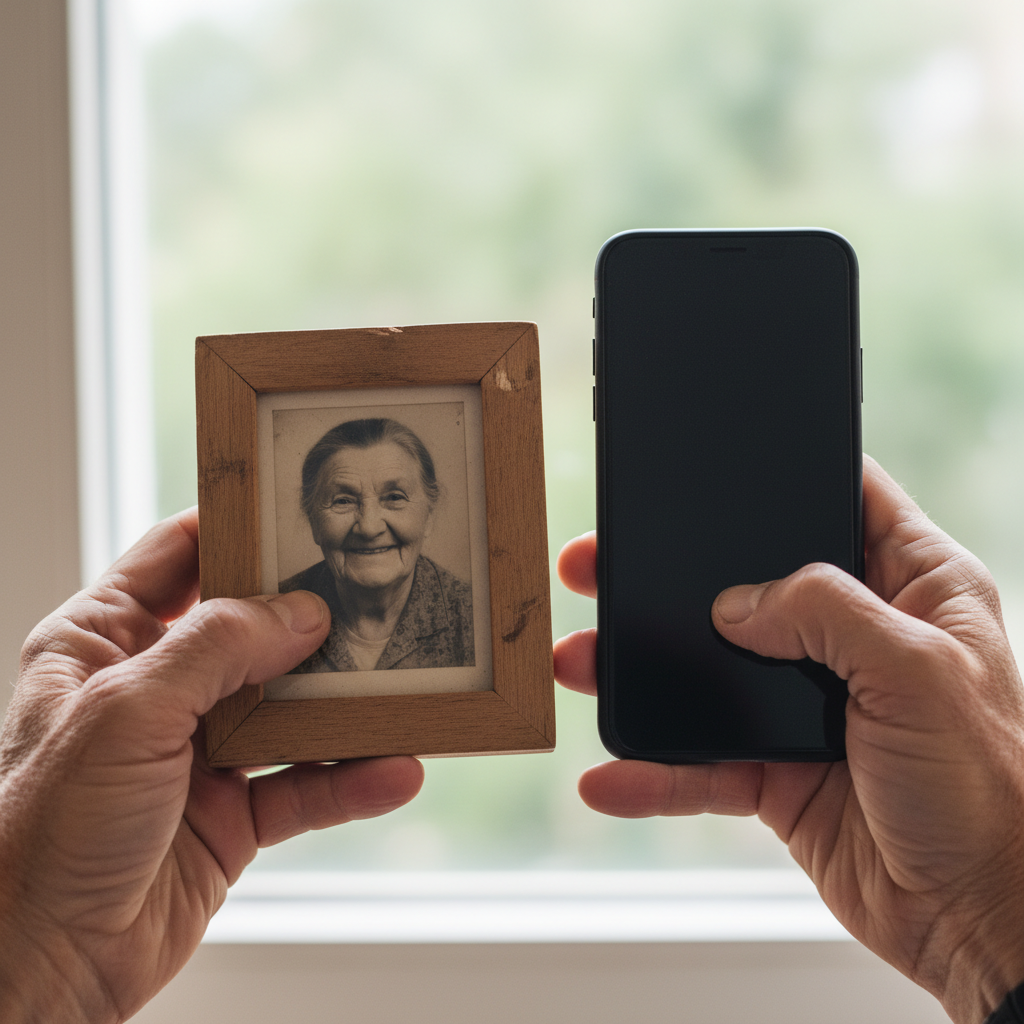
When Zhang Ming lost his grandfather last year, he did what millions of Chinese families have done for centuries: he prepared for Qingming Festival, the annual day of remembrance when families sweep ancestral graves and make ritual offerings. But this year, Zhang added something new to the tradition. He downloaded an app called Lingyu, uploaded old photos and voice recordings, and started talking to an AI avatar of his late grandfather in their regional Tianjin dialect.
"It feels like talking to him again," Zhang told China Daily Asia. "My family finds comfort in it."
Zhang is far from alone. As Qingming 2026 approaches on 4 April, a fast-growing grief tech industry is reshaping how China mourns its dead, powered by generative AI that can clone voices, animate faces, and simulate conversations with people who are no longer alive.
From Niche Service to Mass Market
The numbers tell a striking story. China's AI emotional companionship market is projected to surge from 3.9 billion yuan ($530 million) in 2025 to 59.5 billion yuan ($8.2 billion) by 2028, a compound annual growth rate of nearly 149%. Grief tech, while a subset of that broader category, is one of its fastest-growing segments.
Super Brain, a startup founded by entrepreneur Zhang Zewei in Taizhou, has "resurrected" more than 1,000 people since launching its service. The company feeds large language models information about the deceased, along with images, video, and audio recordings, to produce their likeness. Prices range from several hundred yuan for basic video snippets to 50,000 to 100,000 yuan ($6,860 to $13,710) for fully customised chatbots that can hold extended conversations.
Lingyu, founded by Gao Wei, attracted nearly 10,000 users within two months of launch, with hundreds subscribing to the paid "Digital Life" tier. Silicon Intelligence, a Nanjing-based startup, can create a conversational avatar from just one minute of video footage. And Fu Shou Yuan International Group, one of China's largest funeral operators, now offers cloud-based digital memorials alongside its traditional services.
By The Numbers
- $8.2 billion: Projected size of China's AI emotional companionship market by 2028, up from $530 million in 2025
- 1,000+: Number of deceased individuals "resurrected" by Super Brain's AI avatar service
- 10,000: Users Lingyu attracted within its first two months of operation
- $300 million: Global venture capital invested in grief tech startups over the past two years
- 860,000+: Views on a viral Bilibili video showing a user conversing with an AI-generated grandmother
Qingming Goes Digital Across East Asia
China is not the only country where AI is changing how people remember the dead. In South Korea, a television programme aired a virtual reality reunion between a mother and her deceased daughter, watched by millions and sparking national debate about the ethics of digital grief. Japan has seen the rise of "digital graveyards" aimed at younger generations who live too far from ancestral homes to visit physical burial sites.
"As AI evolves, emotional interactions with multimodal generative AI will become even more immersive. We are only at the beginning of what this technology can offer grieving families." - Gao Wei, Founder, Lingyu
E-commerce platforms across China now host a growing marketplace for these services, ranging from basic voice replication at a few hundred yuan to real-time "video calls" with AI versions of the departed. Orders spike predictably ahead of Qingming Festival, known as Tomb Sweeping Day, when families traditionally clean ancestors' graves and make offerings. The festival falls on a Saturday this year, giving families a long weekend to combine old rituals with new technology.
| Company | Location | Service | Starting Price |
|---|---|---|---|
| Super Brain | Taizhou, China | AI avatar creation, chatbot, holographic models | Several hundred yuan |
| Lingyu | China | Conversational avatar app with dialect support | Free tier + paid Digital Life |
| Silicon Intelligence | Nanjing, China | Avatar from one-minute video clip | Several hundred to several thousand USD |
| Fu Shou Yuan | Shanghai, China | Cloud-based digital memorials | Varies |
| Goodbye Dear | Shanghai, China | AI/AR pet and human memorialisation | Varies |
Beijing Steps In With New Rules
The boom has not gone unnoticed by regulators. In late 2025, China's Cyberspace Administration (CAC) released a draft regulation targeting "anthropomorphic interactive AI," a broad category that covers chatbots, AI companions, and grief tech services that communicate like humans and engage in emotional interaction.
The draft rules, which closed for public comment on 25 January 2026, introduce several requirements that could reshape the industry. Providers must now analyse user emotional states and dependence levels, send mandatory reminders that users are interacting with AI, and ensure interactions stop immediately when requested. For services involving minors or elderly users, emergency contact notification is mandatory.
"If people become trapped in digital grief, it may distort their perception of real-world relationships and emotional health. We need guardrails, not just technology." - Gui Mumei, Sociologist, Tianjin Academy of Social Sciences
One provision stands out for its direct relevance to grief tech: AI systems are explicitly banned from imitating elderly users' relatives. That rule, if enforced as written, could upend the core business model of companies like Super Brain and Lingyu, which exist precisely to recreate deceased family members.
The Psychology of Digital Mourning
Psychologists are divided on whether AI grief tools help or harm the bereaved. Supporters argue they offer a transitional comfort, particularly in cultures where emotional expression around death is tightly prescribed. Critics worry they delay the acceptance that is central to healthy grieving.
"True mourning begins only when one comes to terms with death and acknowledges the change in their life," says Tang Suqin, a psychology professor quoted in Sixth Tone's reporting on AI grief in China. The concern is that an AI avatar, however comforting, allows families to avoid that reckoning indefinitely.
Lin Xiao, an AI researcher at Shanghai Normal University, frames the challenge more pragmatically: "The challenge is to ensure this technology serves emotional needs without crossing ethical boundaries."
- AI grief tools may offer transitional comfort for families in cultures with strict mourning norms, providing a structured way to process loss
- The risk of "digital grief traps" grows as avatar technology becomes more realistic, potentially delaying acceptance
- Legal grey areas around biometric data of deceased individuals remain largely unresolved, even under China's new draft rules
- South Korea and Japan are developing parallel cultural norms around digital memorialisation, though with less commercial urgency than China
What Comes Next
The tension between market demand and regulatory caution will likely define the next phase of China's grief tech industry. Wang Bin, a law professor at Nankai University, warns that AI resurrection involves sensitive biometric data and personal information vulnerable to privacy violations or defamation if misused. The legal frameworks have not caught up with the technology.
Globally, venture capital has poured more than $300 million into grief tech startups over the past two years. As China's generative AI market is forecast to grow from $1.75 billion in 2025 to $27.8 billion by 2033, the segment focused on emotional and memorial services will likely attract a larger share of that investment.
For now, Zhang Ming and thousands of families like his will celebrate Qingming 2026 with a blend of incense and algorithms. Whether Beijing's regulators will let them continue doing so freely remains the open question.
Frequently Asked Questions
What is AI grief tech?
AI grief tech uses generative artificial intelligence to create digital avatars, chatbots, and voice clones of deceased individuals. These tools allow families to hold simulated conversations with their loved ones, using uploaded photos, audio recordings, and biographical data to train the models.
How much does it cost to create an AI avatar of a deceased person in China?
Prices vary widely. Basic video snippets from companies like Super Brain start at several hundred yuan (under $100), while fully customised chatbots capable of extended conversation can cost 50,000 to 100,000 yuan ($6,860 to $13,710). Apps like Lingyu offer free tiers with paid upgrades.
What are China's new rules on AI grief technology?
China's Cyberspace Administration released draft regulations in late 2025 targeting anthropomorphic interactive AI. The rules require providers to monitor user emotional states, send reminders that users are interacting with AI, and ban AI from imitating elderly users' relatives. The comment period closed in January 2026.
Is AI grief tech available outside China?
Yes, though it is most commercially advanced in China. South Korea has experimented with VR reunions between parents and deceased children, and Japan has introduced digital graveyards. Globally, over $300 million in venture capital has been invested in grief tech startups over the past two years.
When is Qingming Festival 2026?
Qingming Festival, also known as Tomb Sweeping Day, falls on Saturday, 4 April 2026. It is a traditional Chinese holiday when families visit ancestral graves, clean burial sites, and make offerings to honour deceased relatives.
Would you trust an AI to carry on a conversation as your late grandmother, or does that cross a line no algorithm should? Drop your take in the comments below.
YOUR TAKE
We cover the story. You tell us what it means on the ground.
What did you think?
Share your thoughts
Be the first to share your perspective on this story
This is a developing story
We're tracking this across Asia-Pacific and may update with new developments, follow-ups and regional context.