A City That Knows Finance Wants to Know AI
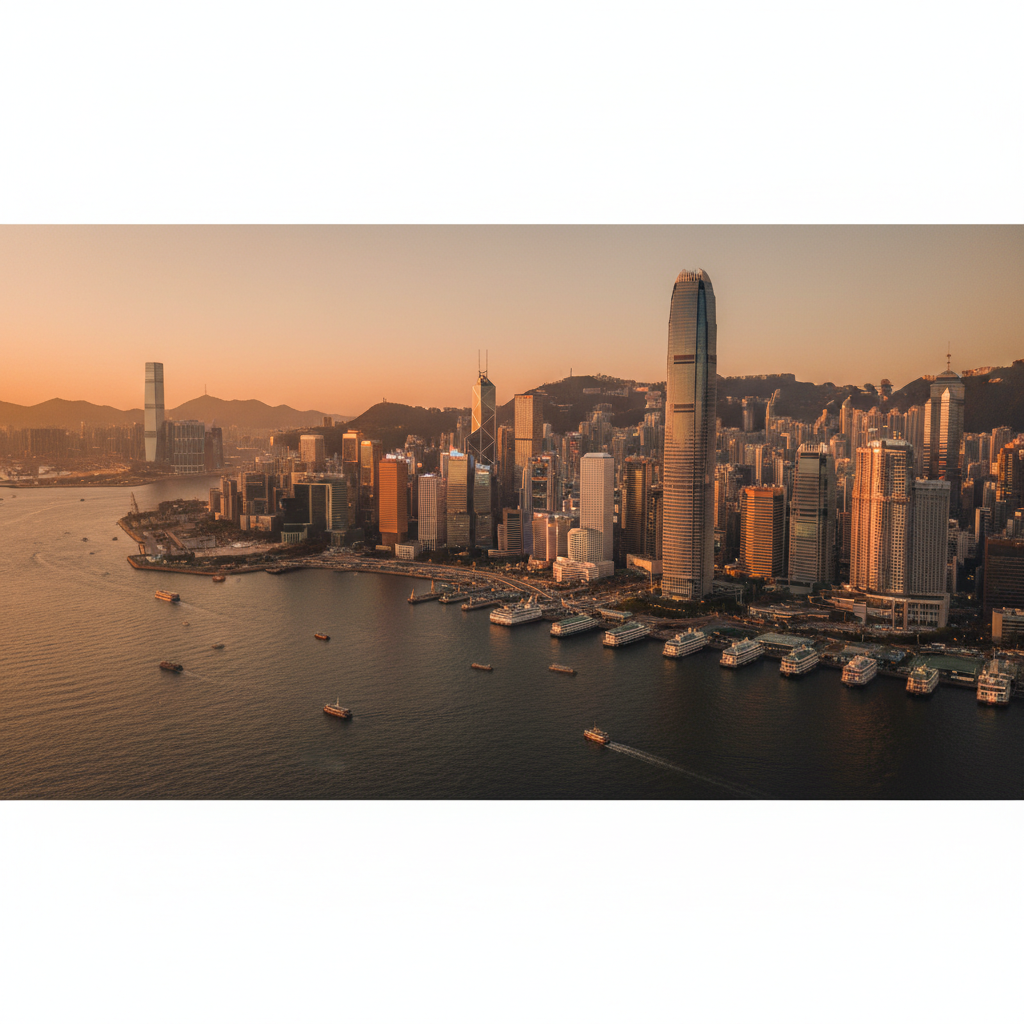
Hong Kong has spent decades building its reputation as a global financial capital. Now the city is placing an equally ambitious bet on artificial intelligence, and it is backing that bet with public money, new institutions, and a governance structure designed to move fast.
On 12 March 2026, the Hong Kong government formally appointed the Board of Directors for the Hong Kong Artificial Intelligence Research and Development Institute, a wholly government-owned body tasked with driving AI research, commercialisation, and industry adoption. The non-official directors serve a two-year term running through March 2028.
What the Institute Actually Does
The institute is not a think tank. It is designed to bridge the gap between academic research and commercial deployment, with an initial focus on large language models, new materials, and biomedicine. It sits at the centre of a broader AI+ strategy that Financial Secretary Paul Chan Mo-po has personally championed since unveiling the 2026-27 Budget in late February.
"We are pressing ahead with the industrialisation of AI and deepening its integration across various industries, while encouraging wider AI application, thereby achieving the target of adoption and utilisation by all." - Paul Chan Mo-po, Financial Secretary, HKSAR Government
The strategy also includes the formation of the Committee on AI+ and Industry Development Strategy, which Chan will chair. Its initial priorities are life and health technology and embodied AI, two sectors where Hong Kong believes it can compete globally rather than simply follow.
The Money Behind the Words
Words are cheap. Hong Kong's commitment becomes more interesting when you look at the capital flows. The government's HK$3 billion AI Subsidy Scheme has already approved around 30 research and development applications. A separate HK$100 million allocation targets AI adoption across government departments. And HK$50 million has been earmarked for AI courses, seminars, and competitions run by public organisations and tertiary institutions.
The private sector is moving even faster. AI companies raised a combined US$4.9 billion via IPOs on the Hong Kong Stock Exchange in December 2025 and January 2026 alone.
By The Numbers
- HK$3 billion: Total AI Subsidy Scheme funding, with roughly 30 R&D applications approved so far
- US$4.9 billion: Capital raised by AI companies through Hong Kong IPOs in December 2025 and January 2026
- 91%: Share of Hong Kong companies increasing their AI investment, according to CDO Trends research
- 5,000 petaFLOPS: Hong Kong's current overall computing power capacity
- HK$10 billion: New injection into the Hong Kong Park in the Hetao Shenzhen-Hong Kong Science and Technology Innovation Cooperation Zone
"AI has become a decisive factor in urban competitiveness, and the corresponding resource input and policy arrangements are of great significance for Hong Kong to seize opportunities in the new round of technological revolution." - Duncan Chiu, Member, Legislative Council of the HKSAR

Why This Matters Beyond Hong Kong
Hong Kong's move fits a broader pattern across Asia-Pacific. Governments are no longer content to let the private sector set the AI agenda. Singapore published its agentic AI governance framework earlier this month. China's 15th Five-Year Plan puts AI at the heart of industrial policy. Japan's AI infrastructure spending will exceed $5.5 billion in 2026, according to IDC.
What makes Hong Kong's approach distinct is its positioning as a bridge. The city has long connected mainland Chinese capital with international markets. The AI Research Institute could play a similar role for AI talent and technology, connecting Chinese-language model development with global commercial applications.
| City/Country | Key AI Initiative (2026) | Focus Area | Scale |
|---|---|---|---|
| Hong Kong | AI Research and Development Institute | LLMs, biomedicine, materials | HK$3 billion subsidy scheme |
| Singapore | Agentic AI Governance Framework | AI safety and regulation | National framework |
| Japan | AI Infrastructure Expansion | Compute and data centres | $5.5 billion in 2026 |
| China | 15th Five-Year Plan AI Push | Industrial AI integration | National strategy |
The Trust Gap That Could Slow Everything Down
There is a catch. According to research from CDO Trends, only 19% of Hong Kong employees strongly agree they would comfortably delegate tasks to an AI agent. That figure compares to 28% on the Chinese mainland. Investment alone does not fix a trust deficit, and the gap between corporate enthusiasm (91% of companies doubling down) and employee comfort is wide enough to trip over.
The institute will need to address this if it wants real adoption rather than headline-friendly pilot projects. Public education funding of HK$50 million is a start, but the real test will be whether the institute can produce research that translates into tools ordinary Hong Kong workers actually want to use.
- Lenovo has invested in more than 300 technology, robotics, and large language model startups, with 10 based in Hong Kong, suggesting the city's startup environment is attracting serious venture attention.
- The Sandy Ridge Data Facility Cluster, covering 250,000 square metres, will further expand Hong Kong's computing capacity beyond its current 5,000 petaFLOPS.
- The Financial Services Development Council has positioned Hong Kong as a global "AI-for-finance" hub, with production-scale deployment already underway in capital markets.
Will the AI Research Institute compete with Singapore's AI governance leadership?
Different mandates. Singapore focuses on setting international norms for AI safety. Hong Kong's institute targets commercialisation and applied research. They complement rather than compete, though both cities are vying for the same pool of AI talent in Asia.
How does Hong Kong's AI spending compare to mainland China?
The scale is different by orders of magnitude. China's national AI fund exceeds $138 billion. Hong Kong's HK$3 billion scheme is modest by comparison, but the city's advantage lies in its legal system, international connectivity, and capital markets access, which mainland cities cannot easily replicate.
What does this mean for AI startups in Hong Kong?
More funding, more compute access, and a clearer path to IPO. The combination of the AI Subsidy Scheme, expanded data centre capacity, and the Hong Kong Stock Exchange's demonstrated appetite for AI listings creates a more complete pipeline from lab to public market.
Is the 91% corporate adoption figure reliable?
The statistic comes from CDO Trends research and reflects intent, not outcomes. Many of these companies are still in early-stage deployment. The gap between planning to invest and generating measurable returns remains the central question for Hong Kong's AI push.
Hong Kong has the capital, the compute, and now the institutional structure. What it does not yet have is proof that government-led AI institutes deliver commercial results faster than markets left to their own devices. Does a city known for laissez-faire economics need a state-backed AI institute to compete, or will the money have been better spent simply lowering barriers for the private sector? Drop your take in the comments below.
YOUR TAKE
We cover the story. You tell us what it means on the ground.
What did you think?
Share your thoughts
Be the first to share your perspective on this story
This is a developing story
We're tracking this across Asia-Pacific and may update with new developments, follow-ups and regional context.