A Bain Capital-Backed Firm Wants to Turn Singapore Into Asia's AI Power Grid
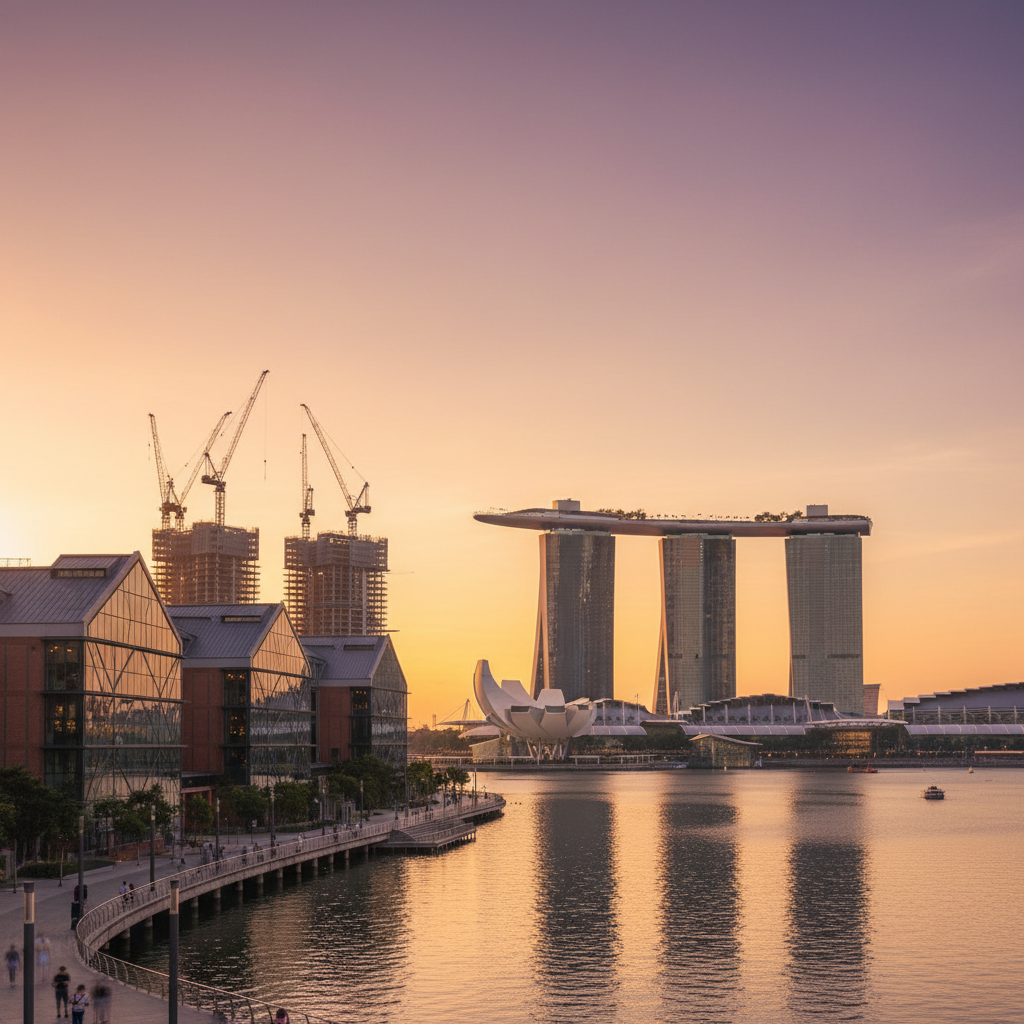
Bridge Data Centres announced last week that it will invest between S$3 billion and S$5 billion (US$2.3 billion to US$3.9 billion) in Singapore's AI infrastructure. The plan includes building next-generation, AI-ready data centre capacity exceeding 2 gigawatts across the region, with Singapore as the primary hub.
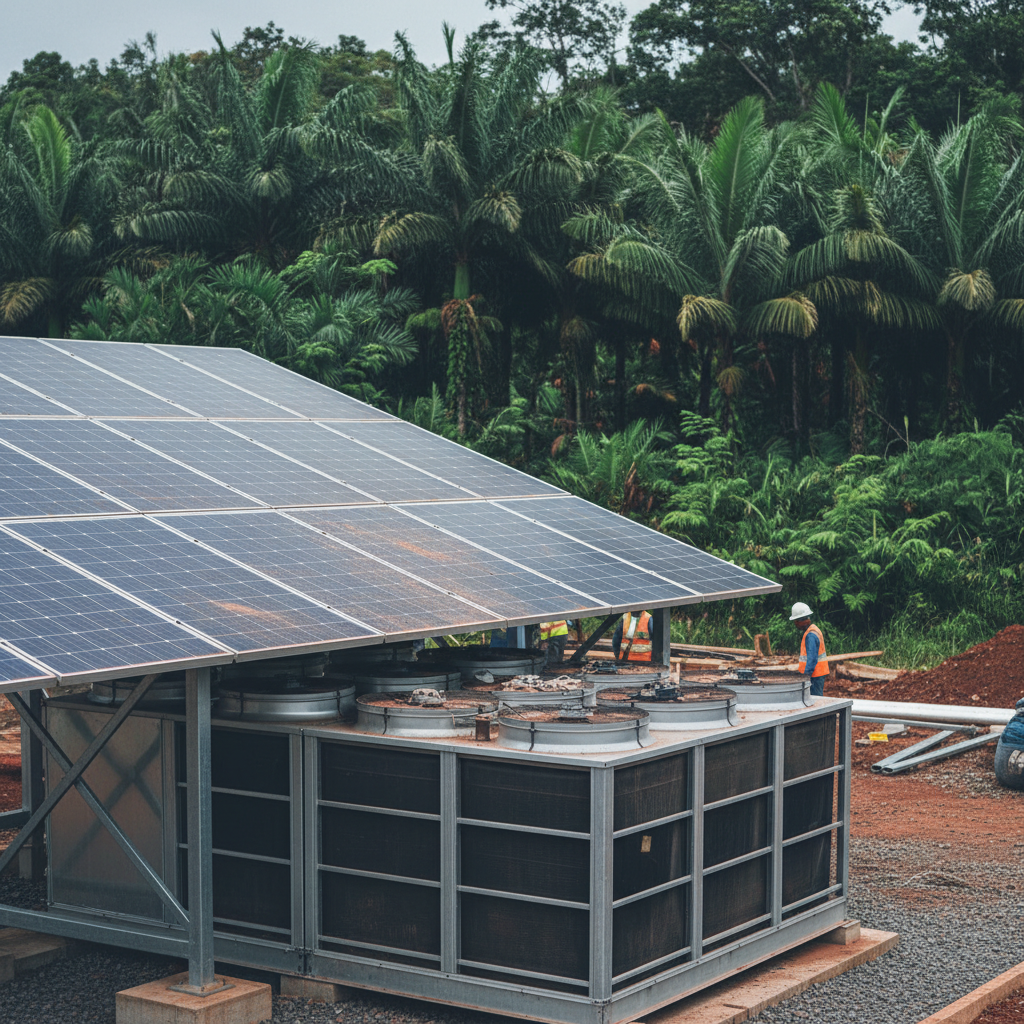
The investment is not just about racks and cooling. BDC is partnering with Concord New Energy on Singapore's first floating hydrogen power generation barge, working with CATL and SK Innovation on tropical-climate energy storage, and collaborating with ASTAR's Institute of High Performance Computing to evaluate nuclear energy for data centres.
Why Singapore, Why Now
Singapore has spent years positioning itself as Asia-Pacific's most trusted digital hub, but the AI boom has changed the maths. Training and running large language models requires power densities that most existing facilities simply cannot deliver. BDC's pitch is that it can close that gap faster than competitors.
"Singapore is the primary focus of this initiative. We will also recruit technical and R&D talent to support AI-related facilities and innovation," said Eric Fan, Chief Executive of Bridge Data Centres, in a statement reported by The Straits Times.
"Singapore is the primary focus of this initiative. We will also recruit technical and R&D talent to support AI-related facilities and innovation." - Eric Fan, Chief Executive, Bridge Data Centres
The company, backed by Bain Capital, already operates hyperscale campuses across Malaysia, Thailand, and India. It recently secured US$2.8 billion in financing specifically for expansion in those markets, signalling that the Singapore push is part of a broader regional play rather than a one-off bet.
The Bigger Picture: A Data Centre Arms Race
BDC is hardly alone. Google has expanded its US$5 billion infrastructure commitment across four data centres and cloud regions in Singapore. Bridge Data Centres itself completed a brand refresh in early 2026 to emphasise its AI capabilities. And in February, a Korea-Singapore AI Connect Summit formalised a government-backed offshore fund projected to scale to US$300 million by 2030, targeting AI and deep-tech startups.
The race is driven by demand. AI workloads require roughly five to ten times the power density of traditional cloud computing. Singapore's limited land mass makes every megawatt of capacity a strategic asset.
By The Numbers
- S$3-5 billion: Bridge Data Centres' planned investment range in Singapore AI infrastructure
- 2 GW: BDC's target regional data centre capacity by 2030
- 3,000: Estimated jobs for students and professionals created by the investment
- US$2.8 billion: Financing BDC secured for expansion across Malaysia, Thailand, and India
- US$5 billion: Google's existing infrastructure commitment in Singapore
Energy Is the Real Bottleneck
What makes BDC's approach distinctive is its focus on energy innovation. Traditional data centres rely on grid power and diesel backup. BDC is exploring hydrogen barges, biomass energy through a partnership with EcoCeres, and even nuclear feasibility studies with Singapore's national research agency.
"The ecosystem and its supply chain advantages are significant. But the real constraint for AI infrastructure in Asia is not silicon - it is sustainable power at scale." - Industry analyst briefing on Southeast Asian data centre investment, March 2026
This matters because Singapore's government has signalled that new data centre capacity approvals will increasingly depend on energy efficiency and sustainability commitments. Any operator that can demonstrate cleaner power sourcing has a regulatory advantage.
What This Means for the Region
Singapore already captures 96.6% of Southeast Asia's startup funding, according to recent venture capital data. Adding world-class AI compute infrastructure reinforces that dominance. For the rest of Southeast Asia, it raises a difficult question: can countries like Indonesia, Vietnam, or Thailand compete for AI workloads when the infrastructure gap keeps widening?
| Company | Investment | Focus | Region |
|---|---|---|---|
| Bridge Data Centres | US$2.3-3.9B | AI-ready data centres | Singapore (primary) |
| US$5B | Cloud regions and data centres | Singapore | |
| Korea-Singapore Fund | US$300M (by 2030) | AI and deep-tech startups | Singapore |
BDC's investments are projected to create around 3,000 jobs for students and professionals, which addresses another constraint: Singapore has compute ambitions but a tight labour market. Training local talent for AI infrastructure operations is as critical as building the facilities themselves.
Not Without Risk
The S$3-5 billion range is wide for a reason. Data centre economics depend on securing long-term customers willing to commit to multi-year contracts. If the AI training boom slows, or if model efficiency improvements reduce compute demand faster than expected, some of that capacity could sit idle.
There is also the question of whether Singapore's physical constraints, limited land and water for cooling, will eventually force operators to look elsewhere in the region regardless of the city-state's other advantages.
- BDC's investment represents one of the largest single AI infrastructure commitments in Southeast Asia this year
- The hydrogen barge and nuclear energy exploration signal a shift beyond conventional power sourcing for data centres
- Singapore's regulatory approach ties new approvals to sustainability, creating a barrier that favours well-capitalised operators
How much will Singapore's AI infrastructure investment affect the rest of Southeast Asia's competitiveness?
Singapore's dominance in attracting AI compute investment could widen the gap with neighbours like Indonesia and Vietnam, which have larger workforces but lack equivalent infrastructure. The next two years will determine whether this concentration benefits or hinders the broader region.
Can data centres really run on hydrogen and nuclear power in tropical climates?
BDC's partnerships with Concord New Energy and ASTAR are exploratory, but they reflect a genuine constraint: traditional power grids cannot sustain AI-scale demand indefinitely. Floating hydrogen barges and nuclear feasibility studies are early-stage but could reshape how data centres are powered across Asia.
Why does Bain Capital keep betting on Asian data centres?
Bain Capital sees data centres as infrastructure plays with long-term, contracted revenue. Asia-Pacific's AI adoption curve is steeper than North America's in percentage terms, making the region attractive for investors willing to build ahead of demand.
Is 2 GW of data centre capacity realistic by 2030?
For context, 2 GW is roughly the power consumption of a small city. BDC's target is ambitious but not unprecedented given the pace of AI infrastructure buildout globally. The constraint is not technology but permitting, power supply agreements, and labour.
Singapore is betting that AI infrastructure will be the next great economic multiplier. Bridge Data Centres is betting that Singapore is right. If both are correct, every other government in Asia-Pacific will need to answer the same question: where does your compute live? Drop your take in the comments below.
YOUR TAKE
We cover the story. You tell us what it means on the ground.
What did you think?
Share your thoughts
Be the first to share your perspective on this story
This is a developing story
We're tracking this across Asia-Pacific and may update with new developments, follow-ups and regional context.