
Ten Nations, One Rulebook
Southeast Asia's approach to artificial intelligence governance is entering a decisive new chapter. After years of voluntary guidelines and non-binding ethical frameworks, ASEAN is pivoting toward enforceable rules that could reshape how AI is built, deployed, and regulated across a region of 680 million people.
Three forces are converging in 2026 to drive this shift. The Philippines, now holding the ASEAN chair, has pledged to deliver a binding legal framework for AI as its signature policy gift to the bloc. Malaysia is standing up the region's first dedicated AI safety institution in Kuala Lumpur. And Vietnam's landmark AI law, Southeast Asia's first, took effect this month after passing parliament in late 2025.
The message is clear: soft law is no longer enough.
The Philippines Bets on Binding Rules
When the Philippines assumed the ASEAN chairmanship under President Ferdinand Marcos Jr. in late 2025, it came with an unusually specific tech policy agenda. Martin Romualdez, then Speaker of the House of Representatives, had previewed the plan at the World Economic Forum in Davos: the Philippines would develop and present a legal framework for artificial intelligence to ASEAN during its chair year.
The proposed ASEAN Legal Framework for AI is being modelled on the Philippines' own draft national AI legislation, which has been working its way through Congress. If adopted, it would mark the first time ASEAN has moved from advisory guidelines to a binding regional instrument on AI governance.
This is significant because ASEAN's track record on tech regulation has leaned heavily toward consensus-based, voluntary approaches. The bloc's existing ASEAN Guide on AI Governance and Ethics, expanded in 2025 to address generative AI, remains non-binding. Member states can follow it or ignore it, and many have done a bit of both.
- Martin Romualdez, Speaker of the Philippines House of Representatives
By The Numbers
- 14.1%: AI diffusion rate across the Global South, including ASEAN, compared with 24.7% in the Global North
- ~50%: Share of Southeast Asian companies that have moved beyond AI pilots, slightly ahead of the global average
- 3%: ASEAN's estimated productivity growth in 2026, leading all major regions
- 15%: Projected rise in Asian tech giants' AI-related capital expenditure in 2026
- Two-thirds: Asia's share of global AI trade growth in the first half of 2025
Malaysia Stands Up ASEAN's AI Safety Hub
While the Philippines works the diplomatic track, Malaysia is building the physical infrastructure for regional AI governance. At the ASEAN Digital Ministers' Meeting in Hanoi in January 2026, digital ministers endorsed the Declaration on the Establishment of the ASEAN AI Safety Network, known as ASEAN AI Safe.
The network's secretariat will be headquartered in Kuala Lumpur, with a governing council of senior officials from all 10 member states providing strategic direction. It is the first institutional mechanism ASEAN has created specifically for AI safety, covering capacity building, regulatory preparedness, and risk mitigation.
Gobind Singh Deo, Malaysia's Digital Minister, has positioned the secretariat as a practical complement to the region's existing guidelines. The network will operate under the frameworks established by the ASEAN Digital Masterplan 2030 and the ASEAN Responsible AI Roadmap 2025 to 2030.
- Gobind Singh Deo, Digital Minister of Malaysia
Vietnam Leads by Example
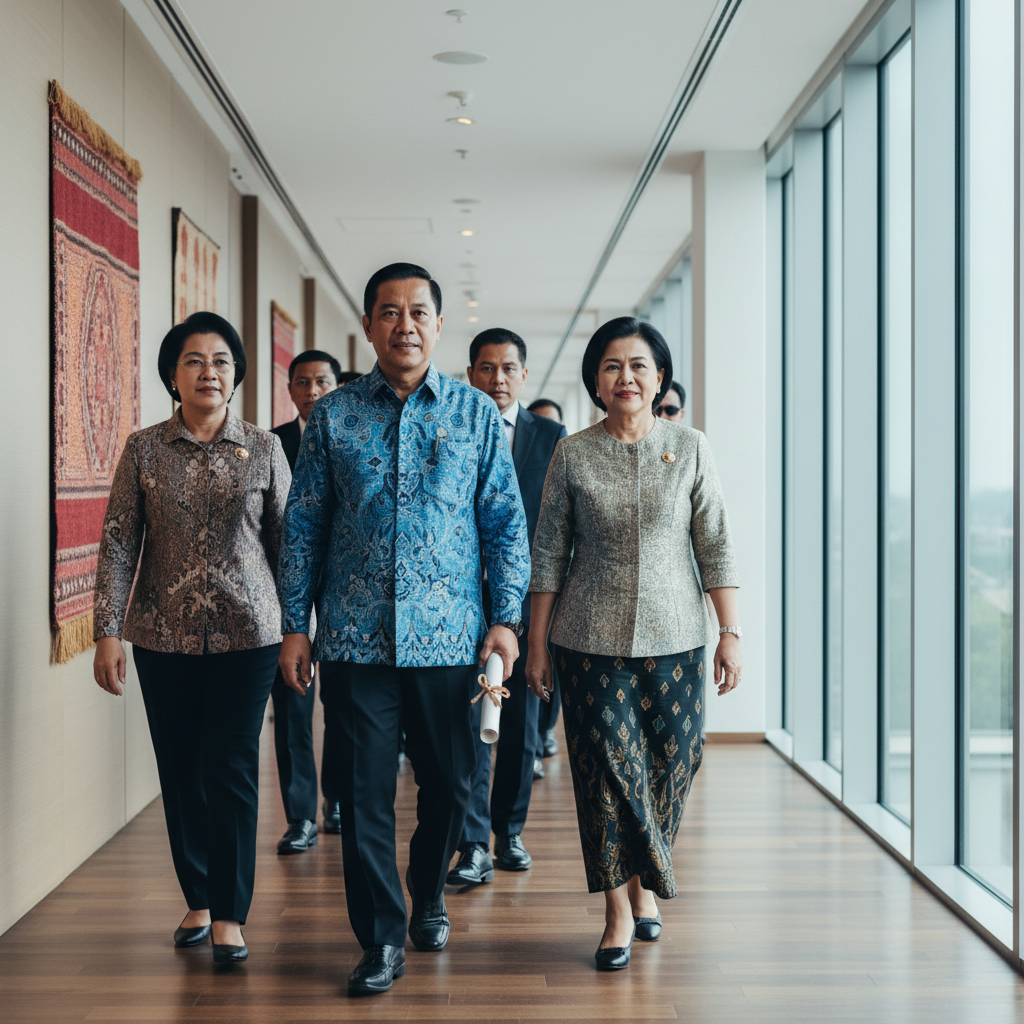
Vietnam is not waiting for regional consensus. Its AI law, promulgated in December 2025, began taking effect in March 2026 with a phased rollout over four years. It makes Vietnam the first country in Southeast Asia to pass comprehensive national AI legislation.
The law establishes requirements for transparency, accountability, and human oversight of AI systems, with specific provisions for high-risk applications in healthcare, finance, and public administration. Vietnam also hosted the sixth ASEAN Digital Ministers' Meeting in Hanoi in January 2026, using its moment as host to push the "From Connectivity to Connected Intelligence" agenda.
Other member states are moving at different speeds. Indonesia has two presidential regulations on AI ethics and a national AI roadmap that are reportedly 90% complete and awaiting President Prabowo Subianto's signature. Singapore continues to lead on AI governance frameworks but favours a principles-based approach over prescriptive legislation. Thailand and South Korea (as an ASEAN dialogue partner) have both enacted AI-specific laws that took effect in 2026.
DEFA Ties It All Together
The most consequential piece of the puzzle may be the ASEAN Digital Economy Framework Agreement, or DEFA. This legally binding trade agreement covers digital commerce, data flows, cybersecurity, and AI governance across all 10 member states. Negotiations have reached what officials describe as "substantial conclusion," with a formal signature expected by the end of 2026.
DEFA matters because it is a trade agreement, not a policy guideline. Once signed, it creates enforceable commitments on AI governance that member states must incorporate into national law. This is the mechanism through which ASEAN's AI policy aspirations could gain real teeth.
| Country | AI Governance Status (2026) | Approach |
|---|---|---|
| Vietnam | AI law in effect (March 2026) | Comprehensive legislation |
| Philippines | Draft national + ASEAN framework | Binding regional rules |
| Indonesia | Presidential regulations pending | Ethics-first executive orders |
| Singapore | Governance frameworks active | Principles-based, voluntary |
| Malaysia | AI Safety Network secretariat host | Institutional capacity building |
| Thailand | AI Act in effect (2026) | Risk-based classification |
The Gap Between Ambition and Adoption
For all the regulatory momentum, ASEAN faces a fundamental tension. The region's AI diffusion rate sits at just 14.1%, roughly half that of the Global North. Regulation is racing ahead of adoption in some member states, raising questions about whether binding rules could slow the very innovation they aim to govern.
Yet the counterargument is equally compelling. Nearly half of Southeast Asian companies surveyed by McKinsey have already moved beyond AI pilots, slightly ahead of the global average. Asia contributed roughly two-thirds of global AI trade growth in the first half of 2025, according to Nomura. The economic opportunity is real and growing.
- ASEAN's productivity growth leads all major regions at an estimated 3% in 2026, driven partly by AI integration in manufacturing and services
- Malaysia's electronics and electrical sector accounts for 40% of national exports, with semiconductors making up 65% of that figure
- Asian tech giants' AI capital expenditure is projected to rise 15% in 2026, much of it flowing into Southeast Asian data centres and infrastructure
The question for policymakers is not whether to regulate, but how to regulate without choking off a growth engine that ASEAN desperately needs.
FAQ
What is the ASEAN AI Safety Network?
ASEAN AI Safe is a regional institutional mechanism endorsed by digital ministers in January 2026. Headquartered in Kuala Lumpur, it coordinates AI safety policy, capacity building, and regulatory preparedness across all 10 ASEAN member states.
Which ASEAN countries have passed AI laws?
Vietnam became Southeast Asia's first country to pass a comprehensive AI law in December 2025, with phased enforcement beginning in March 2026. Thailand and South Korea (as a dialogue partner) also have AI-specific legislation in effect as of 2026.
What is DEFA and why does it matter for AI?
The ASEAN Digital Economy Framework Agreement is a legally binding trade agreement covering digital commerce, data flows, and AI governance. Unlike existing guidelines, DEFA will require member states to incorporate its provisions into national law once signed.
Will ASEAN's AI framework be mandatory?
The Philippines has proposed a binding legal framework for AI during its 2026 ASEAN chairmanship. If adopted alongside DEFA, it would mark a significant shift from ASEAN's traditional reliance on voluntary, consensus-based guidelines.
ASEAN's AI governance landscape is moving faster than most observers expected. Is binding regulation the right call for a region where AI adoption still trails the Global North, or does the bloc risk regulating a future it hasn't yet built? Drop your take in the comments below.
YOUR TAKE
We cover the story. You tell us what it means on the ground.
What did you think?
Related Articles
View more
Asia's AI Privacy Rules Just Got Very Expensive
Seven jurisdictions, USD 12 billion in compliance costs, and regulators finally issuing fines. Asia's AI governance era has arrived.
9 min read

Asia's AI Regulation Rift Costs Billions
Seven frameworks, zero consensus. Asia's AI regulation chaos is costing multinationals USD 2.3bn a year and rising.
10 min read

China's AI Revolution: Five-Year Tech Blitz
Beijing's new five-year plan unleashes an ambitious AI strategy: think robots, quantum, and a bold bid for tech dominance.
4 min read
Share your thoughts
Be the first to share your perspective on this story







No comments yet. Be the first to share your thoughts!
Leave a Comment