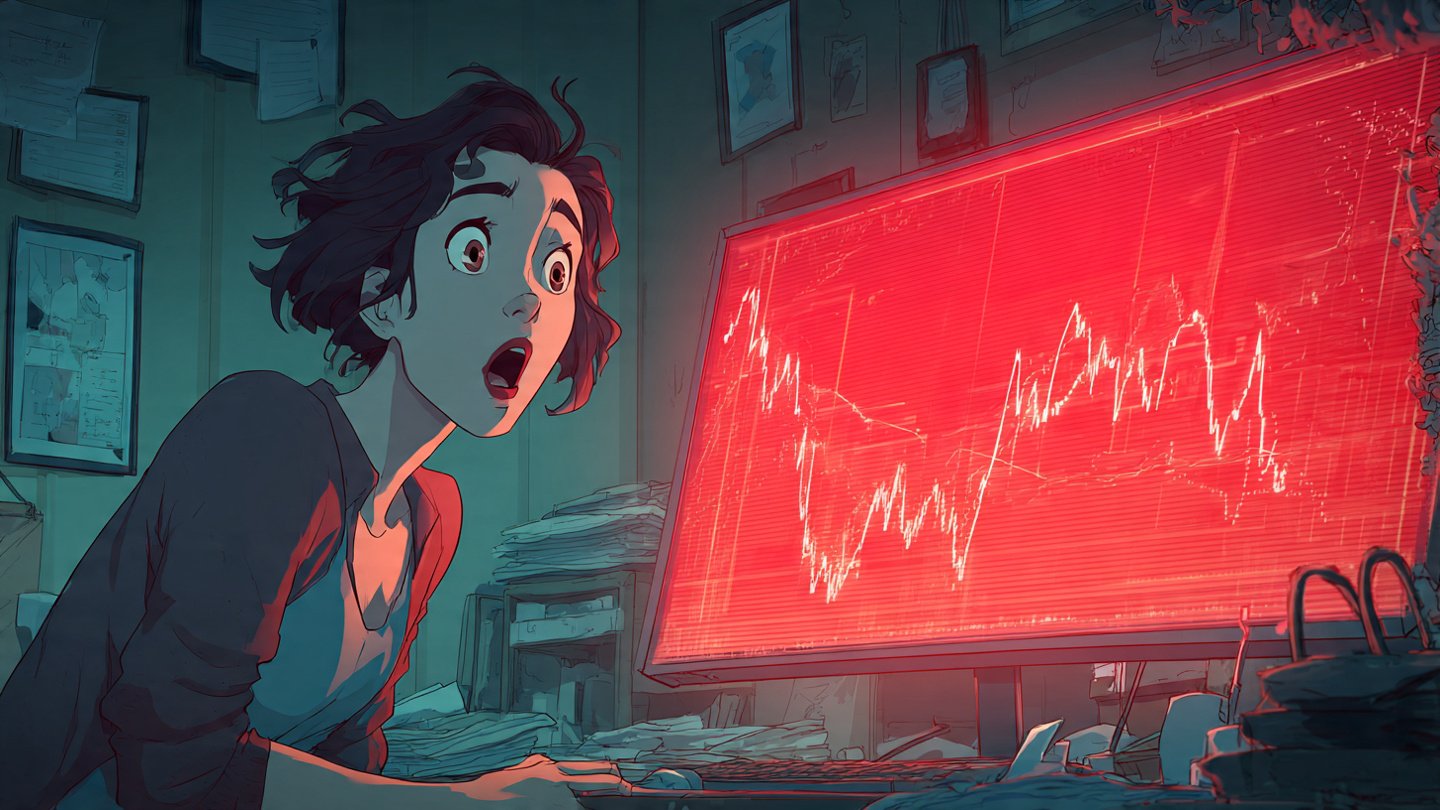
A headline just popped up that actually made me sit up straight: "MIT Releases AI Labor Index".
Now, my first thought was, "Oh great, another dense academic paper with graphs that look like a tangled spaghetti junction." But then it clicked: MIT had basically created a crystal ball for your job, showing you exactly how much of it AI could gobble up. And, naturally, I immediately went and checked my own job, like an anxious parent checking their kid's report card. What I found was genuinely shocking, more so than my last electricity bill.
My 'Future-Proof' Job? Not So Much
Working in tech, there's always this underlying smugness, isn't there? We code, we debug, we practically speak machine language. Surely, we're indispensable, right? Well, MIT's snazzy tool had other ideas. It cheerfully informed me that a whopping 35% of my daily tasks could be done by AI, easily.
Thirty-five percent! That's a significant chunk of my workday. It suddenly made sense why ChatGPT never complains about needing a coffee break or sends me ridiculous memes on Slack. It's like having a colleague who works faster, never grumbles, and doesn't need to be paid. And now, thanks to MIT, it's official. This really highlights the evolving landscape of work, where human-AI skill fusion is becoming less of a buzzword and more of a necessity.
The AI 'Hit List': Who's Up First?
Opening the MIT AI Labor Index feels a bit like looking at a grim prophecy. You see a list of jobs, some glowing green, signalling safety, others flashing red, basically screaming, "Learn a new skill, mate!" As I scrolled, my hope for humanity dwindled slightly.
Here’s a quick peek at the "high exposure" jobs:
- Writers
- Programmers
- Financial analysts
- Content creators
- Customer support
- HR executives
Essentially, if your job involves a laptop and a brain, you're on the list.
Now, for the "low exposure" jobs, the picture is quite different:
- Electricians
- Plumbers
- Drivers
- Nurses
- Carpenters
It seems if you work with your hands and actual physical objects rather than just Google Docs, you're probably safer. Honestly, the guy who fixed my leaky tap last week suddenly seemed like the most secure person on the planet. How has a plumber got more job security than a Python developer? Life truly is unfair, isn't it?
AI Isn't Killing Jobs, But It's Redefining Them
Here's the interesting bit: MIT isn't just saying, "RIP programmers." The tool actually predicts task loss, not necessarily job loss. Your job might survive, but many of its individual tasks are certainly under attack. It's a bit like a swarm of very efficient, digital mosquitoes.
For instance, as a Python developer, I learned that AI won't outright replace me. But it will definitely take over:
- My simpler scripts
- All that boilerplate code
- My constant Google searches
- And possibly my dwindling patience
However, there are things AI just can't touch, at least not yet:
- My wonderfully weird logic
- My messy, creative brain
- My truly terrible variable names
- My uncanny ability to decipher vague client requests like, "Can you make the data do that thing the other app does, but better?"
MIT suggests that humans are still crucial for judgement, creativity, and tidying up the messes AI inevitably makes at 3 AM. That gave me a glimmer of hope, I must admit. Then I remembered that AI doesn't sleep, and that hope quickly began to fade again. This really underlines the discussion around Small vs. Large Language Models Explained.
Playing Around with the Tool (and Annoying My Mates)
Naturally, I couldn't resist testing this out on my friends. First up, my accountant mate. The result? "Very high automation potential." I sent it to him, and his one-word reply was simply, "Unfriend." Fair enough.
Then I tried my cousin, who's a YouTuber. The AI Labor Index reported "Medium exposure. AI might replace editing and scripting." His response? "Bro, I'm not worried. I've got charisma." The tool, in its silent, digital wisdom, seemed to whisper, "Not enough." I quickly closed the tab before he started crying.
Evolve or Be Replaced: The AI Mandate
What MIT is really trying to tell us is pretty straightforward: jobs with high AI exposure are those that rely on predictable, repetitive thinking. AI absolutely loves patterns, routine tasks, rules, and formulas. Humans, on the other hand, thrive in chaos, confusion, and making brilliantly bad decisions that sometimes, by sheer accident, work out.
MIT isn't shouting "Run!", they're saying "Upgrade!" Don't just sit there waiting for AI to steal your job; learn to work with it. Use it as a superpower, not a threat. Because, let's be honest, the people who master AI tools are the ones who'll replace those who don't. Think about how many creators are already using tools like 10 AI Prompts to Create Eye-Catching YouTube Thumbnails or 10 AI Prompts to Create Viral TikTok Shorts to get ahead.
So, Are We Safe?
After spending a good couple of hours messing about with MIT's tool, here's my conclusion: AI isn't the big bad wolf. Our own complacency is. If we stop learning now, AI will absolutely catch up and overtake us. But if we stay curious, keep honing our skills, adapt quickly, and embrace learning, then we win.
For a deeper dive into the methodology and findings, you can check out the actual MIT report here: MIT Work of the Future Initiative.
I'm keeping my job, thank you very much. And you can too. Unless, perhaps, you're an accountant. Just kidding, mostly!
YOUR TAKE
We cover the story. You tell us what it means on the ground.
What did you think?
Share your thoughts
Be the first to share your perspective on this story
This is a developing story
We're tracking this across Asia-Pacific and may update with new developments, follow-ups and regional context.