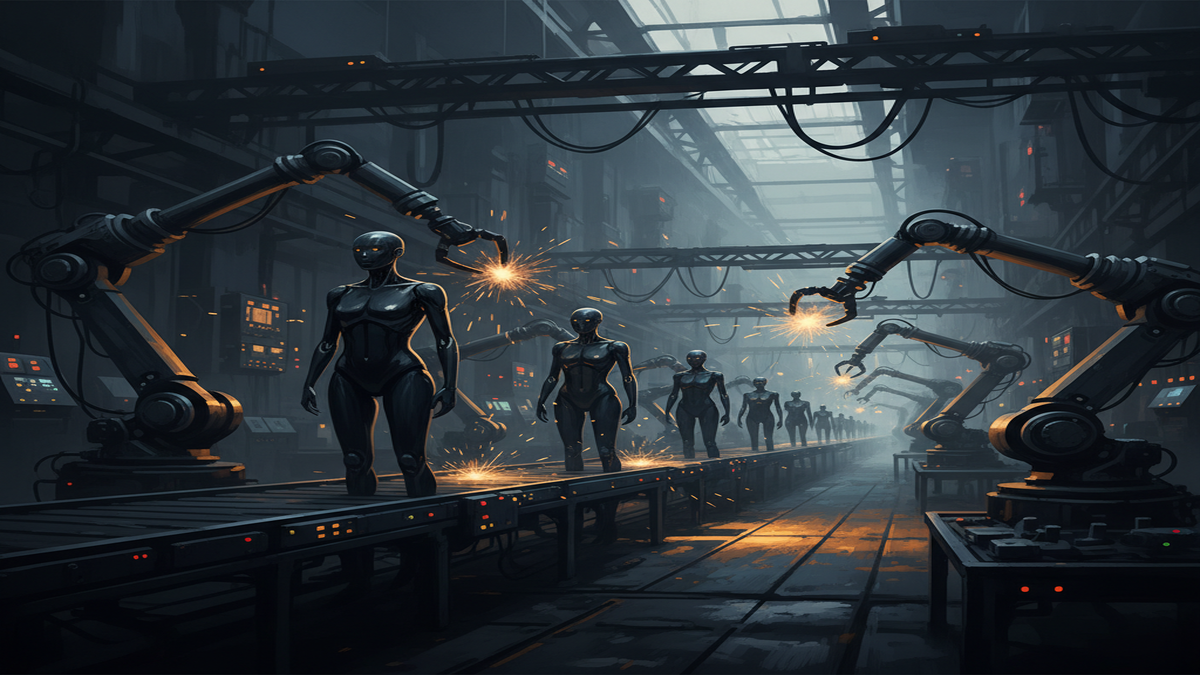
China's Humanoid Robots Are Leaving the Lab and Entering the Factory
For years, humanoid robots were science fiction made flesh at trade shows, impressive on stage but useless on a production line. That is changing fast in China, where more than 150 companies are now racing to turn bipedal machines into factory workers, warehouse operatives, and security patrols. The difference in 2026 is not just ambition; it is infrastructure. Shanghai has opened the world's first automated humanoid robot joint production line, Hangzhou is running a multi-robot training centre with over 100 units, and the national government is backing the entire push with its 15th Five-Year Plan.
The Supply Chain Advantage Nobody Talks About
China's lead in humanoid robotics is not primarily about software or AI models. It is about components. Chinese manufacturers control roughly 70% of global lidar sensor production. Suzhou-based Leaderdrive and Shanghai's Eyou Robot Technology dominate the market for harmonic reducers, the precision gears that give robot joints their dexterity. BYD and other electric vehicle makers have created massive economies of scale in actuators, sensors, and batteries, all of which transfer directly to humanoid robot manufacturing.
This supply chain dominance means that even non-Chinese robot makers depend on Chinese-built parts. For Asian manufacturers in Japan, South Korea, and Southeast Asia, this creates both opportunity and risk: cheaper components accelerate their own automation, but deepen a dependency that could prove difficult to unwind.
"Mechatronics, especially balance, motor control, and dynamic locomotion, has improved dramatically over the past 12 months. China has shown major momentum, with early-stage platforms now demonstrating much higher agility and stability."
— Mike Nielsen, Executive, RealSense
From Gala Stage to Factory Floor
Unitree's humanoid robots made headlines in late January when they performed martial arts routines on CCTV's Spring Festival Gala, watched by hundreds of millions. By February, the Hangzhou-based company demonstrated something far more commercially significant: multi-robot coordination in industrial settings. Stick-fighting performances might grab attention, but the underlying technology, compliant manipulation and real-time environmental adaptation, is what makes these machines useful for assembly lines and warehouse sorting.
| Company | Base | Key Capability | Commercial Application |
|---|---|---|---|
| Unitree | Hangzhou | Multi-robot coordination, martial arts agility | Factory assembly, warehouse sorting |
| X Square Robot | Shenzhen | $144M Series A++ funding (ByteDance-backed) | General-purpose humanoid |
| Galaxea AI | Beijing | G0 Plus model (Jan 2026) | Industrial manipulation |
| Spirit AI | Shanghai | Spirit-v1.5 platform (Jan 2026) | Logistics, security patrols |
| Eyou Robot Technology | Shanghai | First automated humanoid joint production line | Component manufacturing |
The funding tells its own story. X Square Robot closed a $144 million Series A++ round backed by ByteDance, HongShan, and Shenzhen Capital. That is serious money for a startup building general-purpose humanoids, and it reflects investor confidence that China's component ecosystem makes commercialisation achievable, not just aspirational.
By The Numbers
- 150+ humanoid robot developers currently operating in China, though regulators are signalling consolidation ahead (CCTV, March 2026)
- $144 million raised by X Square Robot in Series A++ funding, backed by ByteDance and HongShan (industry reports)
- 70% of global lidar sensor production is controlled by Chinese manufacturers (industry estimates)
- 100+ robots training simultaneously at Hangzhou's Embodied Intelligence Pilot Base (Hangzhou Municipal Government)
- Shanghai launched the world's first automated production line for humanoid robot joints in early 2026 (Eyou Robot Technology)
The Brain Behind the Body
Alibaba's Damo Academy added a critical piece to the puzzle in February with RynnBrain, an open-source embodied AI foundation model. Built on the Qwen3-VL vision-language architecture, RynnBrain gives robots the ability to perceive, reason about, and act in physical environments. The full series of seven models, including a 30-billion-parameter Mixture-of-Experts version, outperformed Google's Gemini Robotics ER 1.5 across 16 benchmarks.
"The model's spatial reasoning capability sets it apart from its peers, marking a leap for Chinese developers in the field of embodied intelligence foundational models."
— Charlie Zheng, Chief Economist, Samoyed Cloud Technology Group Holdings
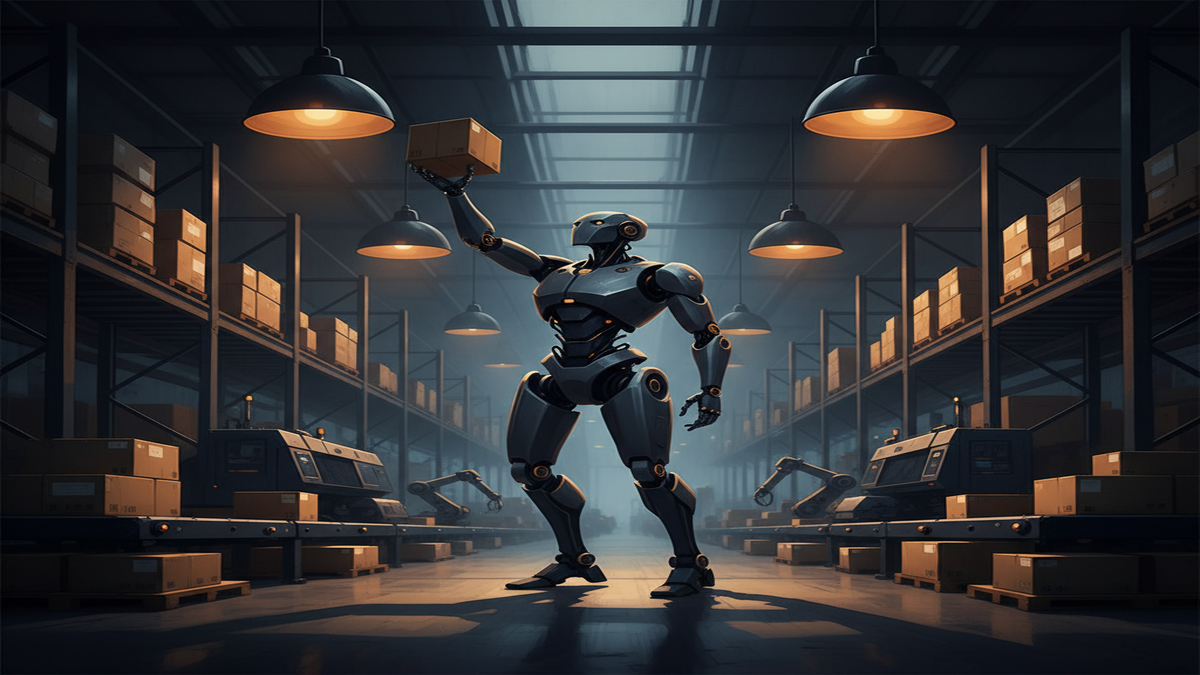
The open-source approach matters. By releasing RynnBrain freely, Alibaba is betting that a shared cognitive platform will accelerate the entire Chinese robotics ecosystem, pulling startups, hardware makers, and researchers onto a common foundation. Tencent's Tairos platform, already deployed in factories, takes a similar approach, offering cloud-based robot orchestration that any manufacturer can plug into.
What This Means for the Rest of Asia
South Korea is responding with its own push. The government's $560 million AX Sprint programme explicitly targets physical AI commercialisation, and the memory chip war between SK Hynix and Samsung is partly driven by demand for the HBM4 chips that power robot training. Japan's industrial robotics giants, Fanuc and Yaskawa, remain formidable in traditional automation but have been slower to pivot to humanoid form factors.
For Southeast Asian manufacturers, the implications are practical. As Chinese-made humanoid robots reach production readiness, factories in Vietnam, Thailand, and Indonesia face a choice: adopt Chinese robotic workers to stay competitive, or invest in alternative automation paths. The AI-driven transformation of Asian industries, from kitchens to clean energy, is accelerating this decision.
"Competition will ultimately hinge not on a single breakthrough but on the resilience of the entire ecosystem."
— Li Xingteng, Deputy General Manager, Hangzhou Embodied Intelligence Pilot Base
Key Drivers of China's Humanoid Robot Boom
- Component supremacy: Dominant position in lidar, harmonic reducers, actuators, and batteries gives Chinese makers a cost advantage that is difficult to replicate
- State backing: The 15th Five-Year Plan names humanoid robots as a breakthrough priority, unlocking subsidies and SOE procurement
- Open-source AI models: Alibaba's RynnBrain and Tencent's Tairos create shared infrastructure that lifts the entire sector
- EV crossover: Electric vehicle manufacturing expertise in actuators and batteries transfers directly to robot production
- Training infrastructure: Dedicated multi-robot facilities in Shanghai and Hangzhou provide the physical data loops that simulation alone cannot
- Venture capital confidence: Record funding rounds like X Square Robot's $144M signal that investors see near-term commercial returns
Are humanoid robots actually being used in Chinese factories today?
Early deployments are under way for specific tasks like warehouse sorting, security patrols, and assembly line assistance. Full-scale replacement of human workers is still years away, but the pace of pilot programmes is accelerating across Shanghai, Hangzhou, and Shenzhen.
How does China's robot supply chain affect other Asian countries?
Chinese manufacturers control critical components like lidar sensors and harmonic reducers. This means robot makers in Japan, South Korea, and Southeast Asia rely on Chinese parts, creating both cost benefits and strategic dependency risks.
What role does AI play in humanoid robotics?
AI provides the cognitive layer that lets robots perceive and reason about physical environments. Open-source models like Alibaba's RynnBrain replace rigid pre-programmed routines with general-purpose spatial reasoning, enabling robots to adapt to unfamiliar tasks.
Will humanoid robots replace factory workers in Asia?
Not imminently, but the trajectory is clear. China's ageing workforce and rising labour costs make automation economically rational. The transition will be gradual, with robots handling dangerous or repetitive tasks first before expanding into more complex roles.
China is betting that humanoid robots are the next manufacturing platform, not a novelty. Is the rest of Asia ready, or already too late to catch up? Drop your take in the comments below.