Nvidia CEO Jensen Huang recently shared his thoughts on AI's impact on employment, and it's certainly given us something to chew on. While he doesn't foresee a sudden wave of AI-driven layoffs, he's pretty clear that our job market is in for some serious changes. It's not all doom and gloom though, as he suggests a whole new raft of job roles could pop up, like "robot tailors" for instance. Yes, you read that right!
AI and the Evolving Job Market
Huang's take, shared during an interview with Joe Rogan, is that jobs requiring more than just routine, repetitive tasks are the ones most resistant to AI's march forward. Think about it: if your job is simply to "chop vegetables," as he put it, a Cuisinart (or an advanced robotic arm) is probably going to do it faster and more efficiently. We've seen similar discussions about how AI affects different industries, and it's a conversation that's really heating up.
On the flip side, some roles, like radiologists, might be safer than we initially imagine. It's not just about scanning images; it's about the intricate process of interpreting those images to diagnose conditions. That human element, the critical thinking and nuanced understanding, is where the real value lies. It's a bit like the idea of Human-AI Skill Fusion, where the best outcomes come from humans and AI working together rather than AI completely taking over.
While Huang acknowledges that some jobs will inevitably disappear, he's steering clear of the more alarming predictions from figures like Geoffrey Hinton, often called the "Godfather of AI," or Anthropic CEO Dario Amodei, who've both suggested massive unemployment due to AI's rapid advancement.
New Roles on the Horizon
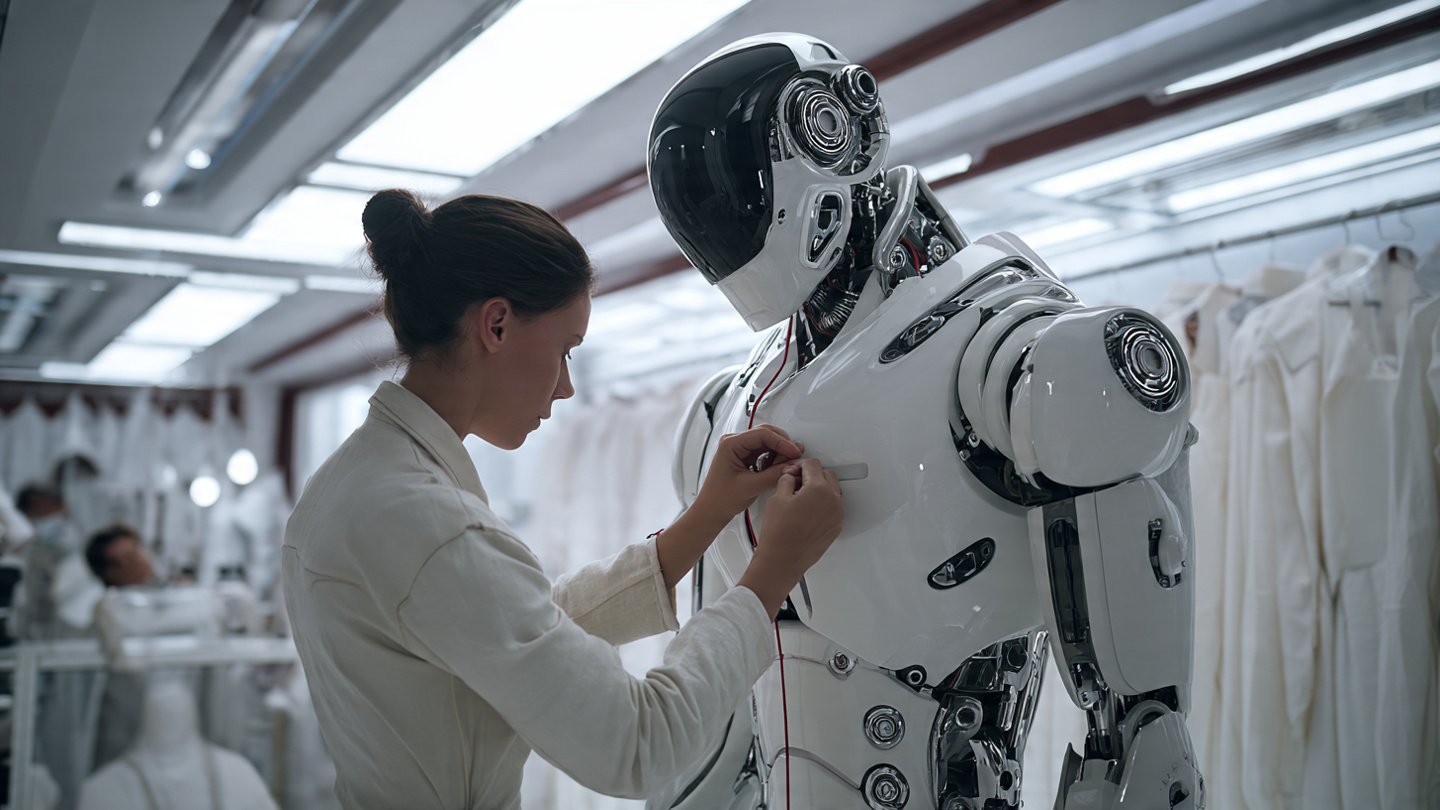
So, what kind of new jobs might an AI-dominated future bring? Huang theorises a demand for technicians to build and maintain AI assistants, which makes a lot of sense. But he also floated some more imaginative ideas. Picture this:
You're gonna have robot apparel, so a whole industry of... because I want my robot to look different than your robot.
The thought of a robot fashion industry is quite something, isn't it? It certainly puts a different spin on thinking about future job markets.
The idea of AI-powered robots taking over human jobs might sound like something out of a sci-fi film, but some of the biggest tech companies are already making it a reality. Tesla, for instance, has its Optimus robot as a key part of its future strategy. Elon Musk even suggested last month that money might become obsolete and work optional within a couple of decades thanks to a fully robotic workforce. It's a bold vision, to say the least!
The Pace of Change
The speed at which AI is advancing is genuinely staggering. A recent MIT report highlighted that AI could adequately perform tasks equivalent to about 12% of US jobs, impacting around 151 million workers and over $1 trillion in wages. That's a significant chunk of the economy potentially facing disruption. You can read more about the broader implications in articles discussing AI's Job Impact: UK Faces Steep Employment Decline. Asia to Follow?. For a deeper dive into the specifics of this report, you can refer to the MIT Work of the Future Initiative.
Even Huang's proposed "robot clothesmaker" role might not be permanent. When Rogan asked if robots could eventually make clothes for other robots, Huang simply replied, "Eventually. And then there'll be something else." This really drives home the idea that the future of work isn't about static roles, but rather a continuous evolution. It's a bit like the concept of Small vs. Large Language Models Explained, where even the tools themselves are constantly evolving and finding new applications. This continuous evolution is also reflected in how companies like OpenAI are approaching their development, as seen in the article OpenAI says human adoption not new models is the key to achieving AGI.
It's clear that AI is going to reshape our professional landscape in profound ways. We're talking about a significant shift, and understanding these trends is crucial for individuals and businesses alike.
YOUR TAKE
We cover the story. You tell us what it means on the ground.
What did you think?
Related Articles
View more
China's AI Subsidy War Bought Users, Not Habits
Tech giants burned 4.5 billion yuan on AI app giveaways. Over 80% of users vanished within a month.
5 min read

Asia-Pacific Sovereign AI Spending Is About to Surge
Over 60% of APAC enterprises plan to increase sovereign AI spending. The question is whether it buys resilience or just cost.
6 min read

AI Doesn't Reduce Work. It Intensifies It.
New research: AI made workers faster, broader, and busier. What leaders are missing could cost them dearly.
11 min read
Share your thoughts
Be the first to share your perspective on this story
This is a developing story
We're tracking this across Asia-Pacific and may update with new developments, follow-ups and regional context.