Title: Why AI Won't Replace You If You Evolve
Content: Robert Gilby on the future of human-first AI in marketing
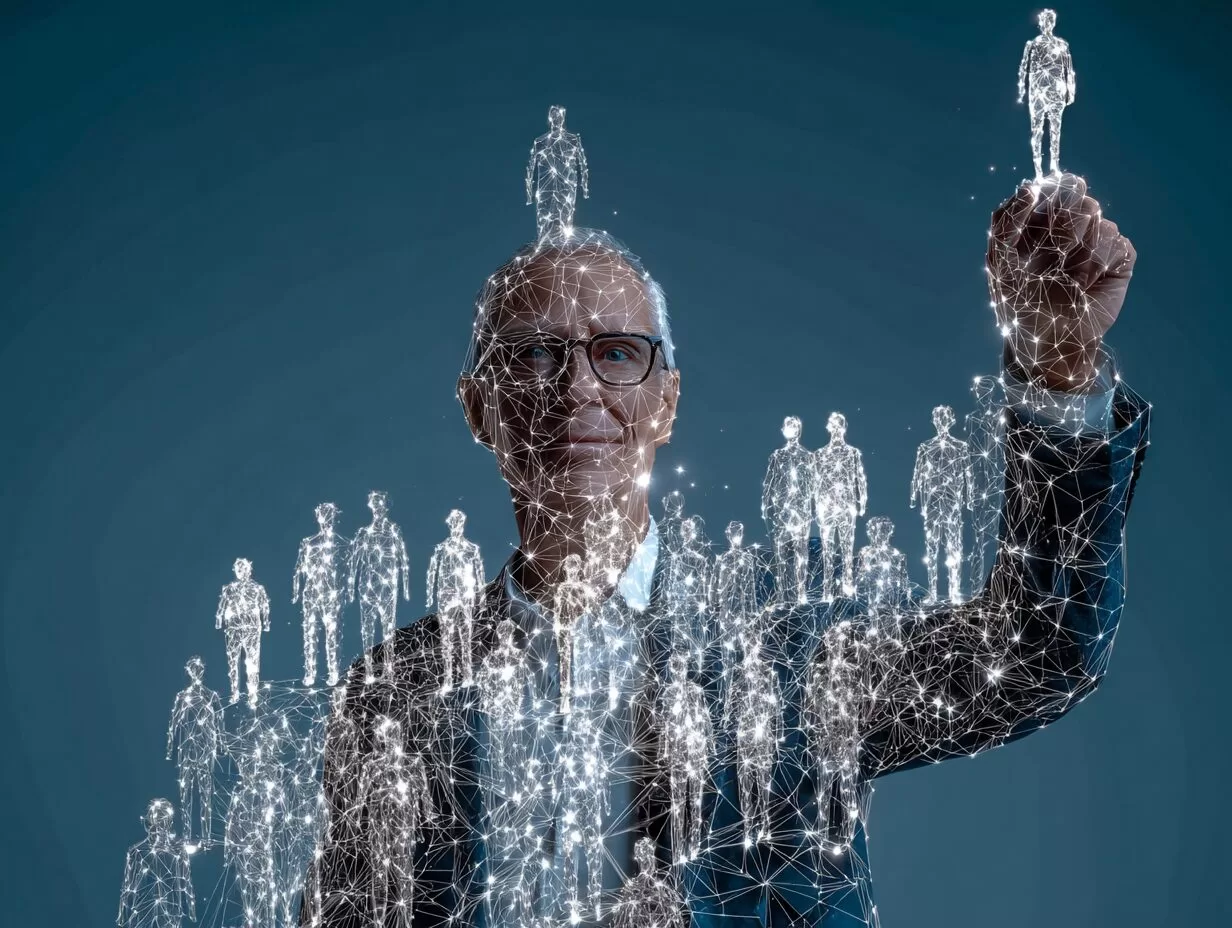
Artificial intelligence is the most profound technological shift marketing has seen in decades. Yet, as Robert Gilby, chairman of Addo AI and CEO of MOONJI, insists, the transformation is not about machines replacing us. It is about AI amplifying what makes us distinctly human — creativity, intuition, and empathy.
AI is most powerful when it augments human skills, not when it replaces them.,Practical AI means solving real business problems with measurable ROI.,Responsible adoption requires diverse data, human oversight, and cultural context.
The human first shift in MarTech
Gilby has seen multiple technological disruptions first-hand, from Disney’s creative reinvention to Dentsu’s strategic pivots. But he is clear that AI represents something deeper. “AI should not replace human intelligence; it should augment and amplify it,” he says. The focus, he stresses, must always remain people-first. The strongest transformations come when teams align around purpose, not just technology.
This approach also addresses the greatest fear: that AI will make human work obsolete. Gilby is pragmatic.
“The danger exists only if we deploy AI irresponsibly,”
“The danger exists only if we deploy AI irresponsibly,”
He notes, pointing to the importance of keeping humans in the loop to maintain fairness and cultural relevance. In India, where languages, traditions, and economic conditions vary dramatically, the cost of neglecting diversity is too high. Bias in AI is not simply a coding issue; it is a human one.
Practical AI in the marketing stack
For Gilby, practical AI means stripping away hype and focusing on outcomes. At MOONJI, generative AI powers video production and virtual sets, making creativity more affordable and faster. SQREEM uses cognitive AI to draw behavioural insights from billions of consumer decisions, allowing brands like L’Oréal to target audiences more precisely.
“If AI doesn’t improve ROI, relevance, or speed, it isn’t practical,” he explains.
“If AI doesn’t improve ROI, relevance, or speed, it isn’t practical,” he explains.
This pragmatic view is reshaping MarTech. Tools like semantic search and vector databases are not trophies to showcase but enablers to drive better decisions.
As Gilby warns, “Don’t put a Ferrari engine in a go-kart.”
As Gilby warns, “Don’t put a Ferrari engine in a go-kart.”
The technology must serve the business goal, not the other way round.
Why Asia’s context is unique
Deploying AI across Asia-Pacific is very different from the West. Infrastructure readiness varies, consumer behaviours are fragmented, and the linguistic and cultural diversity adds layers of complexity.
“User behaviour in Jakarta isn’t the same as in Mumbai or Bangkok. Local context must shape model training,” says Gilby.
“User behaviour in Jakarta isn’t the same as in Mumbai or Bangkok. Local context must shape model training,” says Gilby.
Yet, this complexity is a strength. Countries like India are leapfrogging with indigenous AI models built by local talent. If an AI system can handle India’s diversity, Gilby believes it can work almost anywhere.
ROI and where AI is delivering now
Marketing and advertising are already seeing clear returns. WPP is using open intelligence platforms to process vast datasets. Meta and YouTube rely on dynamic content optimisation. MOONJI itself has reduced location shoots by replacing them with LED-driven generative content at scale.
“It’s faster, cheaper, and just as compelling,” says Gilby.
“It’s faster, cheaper, and just as compelling,” says Gilby.
FMCG, fashion, and media companies are following suit. The drive is not just efficiency but resonance.
As Gilby puts it, the shift is “from counting eyeballs to measuring heartbeats.”
As Gilby puts it, the shift is “from counting eyeballs to measuring heartbeats.”
Building the right skills
For marketers, the priority remains the customer. The funnel is now data-driven, but the mission is unchanged: build awareness, drive consideration, secure conversion. The difference is that AI can now accelerate insights, sharpen targeting, and personalise experiences in ways that were impossible before.
The skillset modern marketers need blends technical awareness with creativity. Understanding governance, data provenance, and bias mitigation is essential. But so too is the ability to connect emotionally, to use AI not to replace creative thinking but to elevate it.
Regulation, fairness, and the road ahead
Regulation, Gilby argues, must ensure fairness and opportunity. Data protection, consent, and bias mitigation are non-negotiable. As AI shifts towards agentic systems, making decisions on our behalf governance becomes even more urgent. Businesses must step up before regulators catch up.
The promise lies in predictive cultural intelligence; anticipating shifts before they occur by blending neuroscience, behavioural analysis, and social listening. Gilby is animated by this prospect: campaigns designed not around what is trending, but what will trend tomorrow. A recent study by the Pew Research Center highlights how AI's influence on public opinion is growing, making such predictive intelligence crucial for marketers. Pew Research Center Study on AI's Impact on Public Opinion
“No one is ever fully ready,” he concedes. But if we focus on responsible, human-centred AI, he believes we will find the right path.
“No one is ever fully ready,” he concedes. But if we focus on responsible, human-centred AI, he believes we will find the right path.
As Asia moves deeper into the AI era, the question is no longer whether AI will replace marketers, but how marketers will evolve with AI. Are you using AI to strip away the drudgery or to strip away the creativity? The answer may define your relevance in the decade ahead.
YOUR TAKE
We cover the story. You tell us what it means on the ground.
What did you think?
Related Articles
View more
AI Smart Glasses Are About to Go Mainstream in Asia
Shipments surged 139% last year and China controls 80% of the supply chain. The tipping point is here.
5 min read

AI Language Tutors Are Replacing Classrooms Across Asia
A $1 billion app and 32.9% market share say Asia's language learners have already picked their new teacher.
6 min read

AI Therapists Are Booming Across Asia Pacific
Not enough human therapists, too much stigma, and a smartphone in every pocket.
7 min read
Share your thoughts
Join 4 readers in the discussion below
This is a developing story
We're tracking this across Asia-Pacific and may update with new developments, follow-ups and regional context.