

Asia's Young Workers Are Caught in the Crossfire of AI-Driven Mass Layoffs
From Seoul to Singapore, from Tokyo to Jakarta, a generation of young workers is confronting a labour market that is transforming faster than any education system can keep pace with. Mass layoffs are rippling across industries , tech, aviation, financial services, retail , and the workers absorbing the sharpest blows are those who only recently entered the workforce, or who have not yet managed to enter it at all.
This is not a cyclical downturn. The restructuring underway in 2025 and into 2026 is structural, technology-driven, and disproportionately concentrated at the entry and mid-career levels where young workers sit. Artificial intelligence is not merely displacing routine tasks. It is collapsing entire job categories that graduates were trained to fill.
By The Numbers
- Youth unemployment across Southeast Asia remains persistently elevated, with the International Labour Organization estimating the regional youth jobless rate at roughly three times the adult rate.
- Tech sector layoffs globally exceeded 260,000 in 2023 alone, with Asia-Pacific operations among the hardest hit as multinationals consolidated headcount.
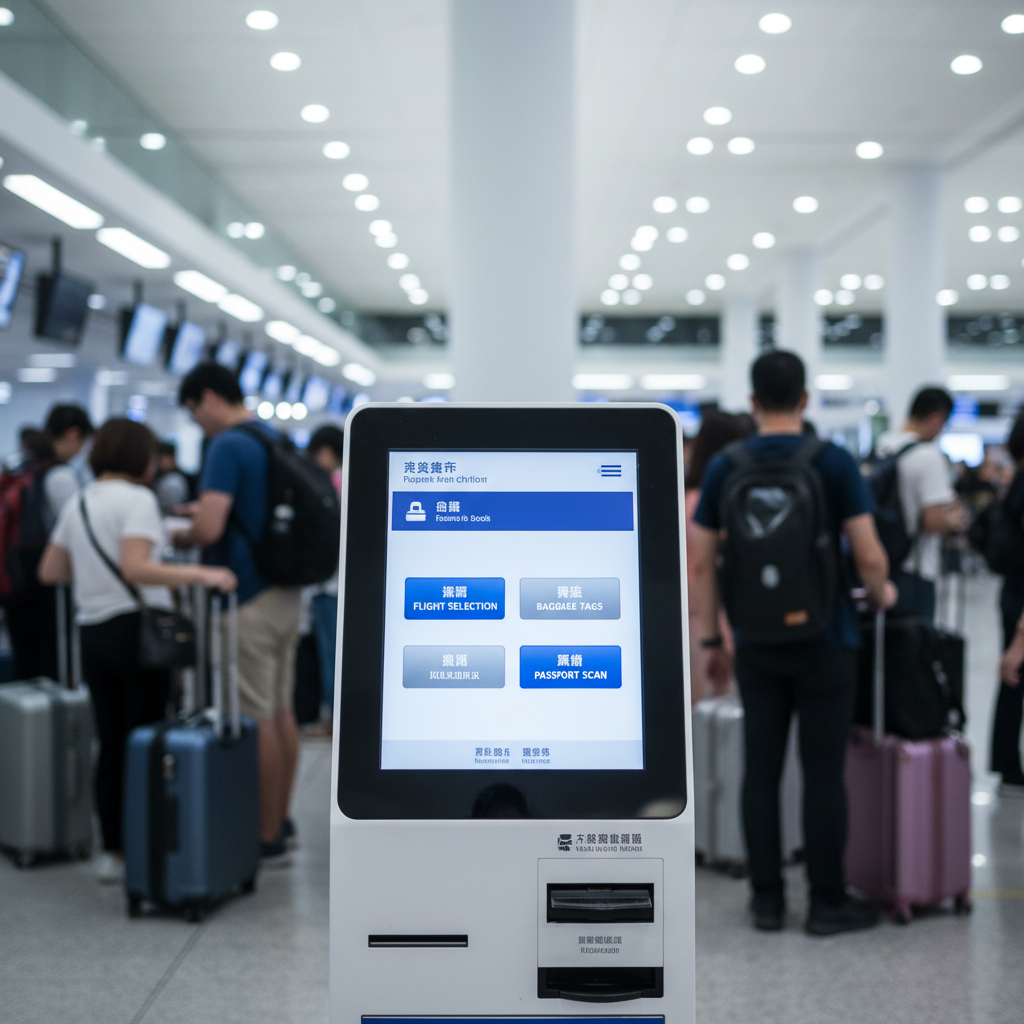
- Airlines across Asia-Pacific have accelerated automation of customer-facing roles, with AI chatbots and self-service kiosks reducing demand for ground staff and call centre workers.
- South Korea's youth unemployment rate hit a multi-year high in 2024, with over-educated graduates competing for a shrinking pool of stable, salaried positions.
- Japan faces a paradox: a structural labour shortage overall, yet record numbers of young people in precarious or non-standard employment arrangements.
The Industries Driving the Crisis
Technology companies were the first to move, but they are far from the last. The wave of layoffs that began in late 2022 in Silicon Valley arrived in Asia's tech hubs with a delay , and then accelerated. Regional offices of global platforms, domestic e-commerce giants, and fintech startups alike have trimmed headcounts, citing AI-driven productivity gains as justification for leaner teams.
Aviation has emerged as a particularly sharp illustration of the trend. Across the region, airlines have invested heavily in AI-powered customer service tools, automated check-in infrastructure, and operations management software. The roles being eliminated , reservation agents, customer care staff, ground operations coordinators , are precisely the kind of structured, process-driven positions that young workers without specialist skills have historically used as entry points into stable employment.
"The jobs that used to serve as a ladder into the middle class are increasingly the jobs that AI is best positioned to automate first." - International Labour Organization, World Employment and Social Outlook
Financial services tell a similar story. Banks across Hong Kong, Singapore, and South Korea have been automating back-office functions for years, but generative AI has now reached into roles previously considered safe: junior analysts, compliance reviewers, document processors. Entry-level banking positions, once a reliable destination for finance graduates, are growing scarcer.
The Asia-Pacific Picture
Asia's youth employment crisis has distinct national flavours, but a common thread runs through all of them: the mismatch between what education systems produce and what employers now need.
In South Korea, the phenomenon of gwarosa , overwork culture , coexists with a generation of graduates who cannot find stable work at all. The country's large conglomerates, the chaebol, have long been the primary employers of elite graduates. As these corporations restructure and automate, competition for remaining positions has become ferocious, and those without connections or elite credentials are increasingly locked out.
In Japan, labour shortages in sectors like care, construction, and agriculture sit awkwardly alongside underemployment among younger cohorts who were trained for office roles that are now being automated. The government has pushed workforce reskilling initiatives, but uptake has been slow and the mismatch persists.
In Southeast Asia, the picture is more complex. Indonesia, the Philippines, Vietnam, and Thailand all have large youth populations entering labour markets simultaneously. The region's digital economy has generated new roles, but not at the pace or in the locations where young workers are concentrated. Rural graduates who migrate to cities find an urban job market that AI is actively reshaping around them.
"We are seeing the first generation of workers who entered the workforce after the AI inflection point , and the labour market has not built the infrastructure to absorb them." - World Economic Forum, Future of Jobs Report 2025
Singapore has been proactive in addressing the skills gap through SkillsFuture, a national continuing education framework that subsidises upskilling for workers at all career stages. But even Singapore's policymakers acknowledge that the pace of AI adoption is outrunning the pace of workforce adaptation. For young Singaporeans from lower-income households, the cost of retraining in time and opportunity remains a genuine barrier.
What AI Automation Actually Means for Entry-Level Work
There is a persistent myth in corporate communications that AI will "augment" workers rather than replace them. The reality playing out across Asia is more complicated. For experienced, senior workers with scarce domain knowledge, augmentation is often the accurate description. For entry-level workers performing structured, repeatable tasks, replacement is the more honest word.
The roles disappearing fastest share common characteristics. They involve processing structured data, responding to predictable queries, following documented procedures, and producing standardised outputs. These are exactly the tasks that large language models and AI workflow tools handle with increasing proficiency. They are also the tasks that young workers have historically performed while building experience, networks, and institutional knowledge on the job.
This matters because learning-by-doing is not optional. It is how workers develop the tacit knowledge that eventually makes them valuable at higher levels. When the entry-level rungs of the career ladder are automated away, the path upward becomes structurally broken. You can read about the hidden psychological costs of AI-driven productivity pressure , but the career development damage is equally underreported.
It is also worth noting that this is not purely about job destruction. Small businesses across Asia are using AI to compete in ways that generate new categories of work. The problem is that these new roles tend to require existing skills and experience , the very things young workers have not yet had the opportunity to accumulate.
The Sectors Still Hiring , and What They Demand
The layoff narrative risks obscuring the fact that labour demand has not disappeared. It has shifted. The following sectors across Asia-Pacific are actively hiring, but the profile of candidate they seek has changed materially.
| Sector | Demand Status | Key Skills Required | Entry-Level Accessible? |
|---|---|---|---|
| AI and machine learning engineering | High demand | Python, model fine-tuning, MLOps | Partially, with technical degree |
| Cybersecurity | Critical shortage | Threat analysis, cloud security, compliance | Yes, with certification pathways |
| Healthcare and aged care | Growing demand | Clinical skills, human empathy, coordination | Yes, but lower wage ceiling |
| Skilled trades and infrastructure | Persistent shortage | Electrical, mechanical, construction | Yes, via apprenticeship |
| AI product and prompt engineering | Emerging demand | Communication, domain expertise, AI tooling | Limited, role still maturing |
The common thread across sectors still hiring is human-facing complexity. Tasks requiring physical presence, genuine empathy, unpredictable problem-solving, or deep contextual judgement remain resistant to AI substitution , at least for now. Governments and education systems that pivot vocational training toward these areas will give their young workers a more durable foundation. Those that do not will find the youth unemployment crisis compounding.
The broader geopolitical dimension matters here too. China's government has explicitly tied AI development to national economic strategy, and the scale of that ambition is reshaping regional labour dynamics. Understanding China's five-year AI development plan is essential context for anyone assessing where Asia-Pacific employment is heading. Meanwhile, Chinese AI models are rapidly closing the capability gap with Western counterparts, which will accelerate automation across the region's supply chains.
What Young Workers Should Actually Do
Structural forces are not destiny. Individual workers can and do navigate difficult labour markets , but they need honest advice rather than platitudes about lifelong learning.
- Develop AI fluency, not just awareness. Understanding how to direct, evaluate, and quality-check AI outputs is becoming a baseline professional skill across virtually every sector.
- Pursue roles where the learning curve is steep. Jobs that are hard to learn are harder to automate. Seek out complexity.
- Prioritise sectors with structural demand. Cybersecurity, healthcare, and skilled infrastructure work offer more durable employment than roles centred on information processing.
- Build networks aggressively. In a market where AI screens CVs and replaces entry-level tasks, human referrals and professional relationships carry more weight than they did a decade ago.
- Consider geographic arbitrage. Labour shortages in Japan and parts of Australia are real. For workers in markets with surplus graduates, mobility can be a meaningful strategic option.
The broader question for governments and employers is whether they are willing to invest in the transition, or simply manage the social consequences of it. Education reform, apprenticeship expansion, and genuine reskilling investment are not cheap. But the alternative , a generation of young people locked out of productive employment , carries its own enormous costs. You can explore how AI use is actually playing out in daily working life across Asia to understand the gap between corporate rhetoric and on-the-ground reality.
Frequently Asked Questions
Which industries in Asia are cutting the most jobs due to AI?
Technology, aviation, financial services, and retail are seeing the heaviest AI-driven restructuring across Asia-Pacific. Entry-level and mid-level roles involving structured data processing, customer service, and administrative functions are the most exposed. Airlines in particular have accelerated automation of ground operations and customer-facing roles since 2023.
Is youth unemployment in Asia getting worse because of AI?
AI automation is a significant factor, but it intersects with demographic pressure, post-pandemic economic restructuring, and mismatches between education outputs and employer demand. Countries like South Korea and China face particularly acute graduate unemployment in sectors that are simultaneously automating and consolidating headcount.
What jobs are most secure for young workers in Asia right now?
Roles requiring physical presence, genuine human empathy, or unpredictable problem-solving are more resistant to near-term automation. Cybersecurity, healthcare and aged care, skilled trades, and AI-adjacent technical roles offer more durable employment prospects than information-processing or customer service positions in most Asian markets.
Given the pace at which AI is reshaping the entry-level job market in your sector or country, what concrete steps are you or your organisation actually taking to protect young workers' career pathways? Drop your take in the comments below.
YOUR TAKE
We cover the story. You tell us what it means on the ground.
What did you think?
Related Articles
View more
AI Smart Glasses Are About to Go Mainstream in Asia
Shipments surged 139% last year and China controls 80% of the supply chain. The tipping point is here.
5 min read

AI Language Tutors Are Replacing Classrooms Across Asia
A $1 billion app and 32.9% market share say Asia's language learners have already picked their new teacher.
6 min read

AI Therapists Are Booming Across Asia Pacific
Not enough human therapists, too much stigma, and a smartphone in every pocket.
7 min read
Share your thoughts
Join 4 readers in the discussion below
This is a developing story
We're tracking this across Asia-Pacific and may update with new developments, follow-ups and regional context.







Latest Comments (4)
this is so because we just had a discussion in my ethics seminar last week about how these kinds of stats for youth unemployment often get framed in Western media. there's this underlying assumption that it's just about adapting skillsets but when you see South Korea's graduates are over-educated and still struggling, that really points to a deeper structural issue. it's not simply an individual responsibility to reskill your way out of total job category collapse. this feels like a much bigger conversation on how economies restructure
was just talking to a friend at Google about this. they're automating so much of the entry-level data processing and customer support it's wild the number of junior roles that are just gone.
i usually just lurk on these posts but the mention of airlines accelerating automation for customer-facing jobs really got me. are they even thinking about the user experience in these transitions? 💭
The point about customer-facing roles in airlines getting automated with ai chatbots is so spot-on. we implemented a similar system for tier 1 support tickets last year. initially, the team was super worried about losing jobs, but it actually freed up our human agents to tackle the really complex stuff, improving resolution times overall. it's a huge shift, not just displacement if you manage it right. 😒
Leave a Comment