The US is considering restrictions on China’s access to AI memory chips and related equipment.,The new rules aim to curb the supply of high-bandwidth memory (HBM) chips from companies like SK Hynix and Samsung.,The measures are part of a broader package to safeguard US technological ecosystems and national security.
The AI Chip Race Heats Up
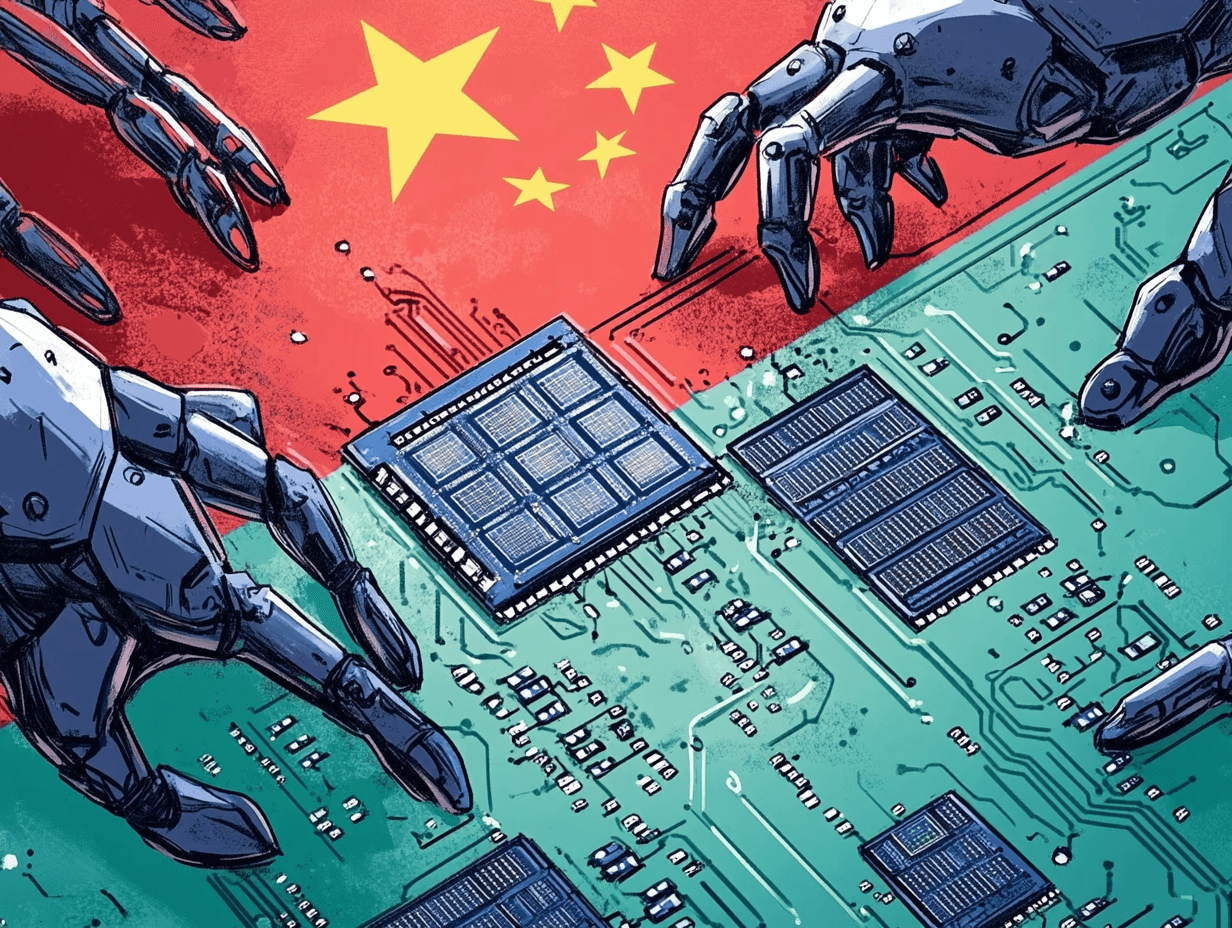
The United States is considering new restrictions on China’s access to artificial intelligence (AI) memory chips and the equipment needed to make them. This move is set to escalate the tech rivalry between the world’s two largest economies. The measure aims to prevent leading memory chipmakers, such as Micron Technology, SK Hynix, and Samsung Electronics, from supplying Chinese firms with high-bandwidth memory (HBM) chips. These chips are crucial for running AI accelerators from companies like Nvidia and Advanced Micro Devices (AMD).
What Are HBM Chips?
High-bandwidth memory (HBM) chips are advanced semiconductors that are essential for AI applications. They provide the high-speed data transfer needed for complex computations. The new restrictions would cover HBM2, HBM3, and HBM3E chips, which are the most cutting-edge AI memory chips currently available.
Impact on Chipmakers
If enacted, the new rules would significantly affect South Korean firms SK Hynix and Samsung. These companies rely on US chip design software and equipment from companies like Cadence Design Systems and Applied Materials. Micron, however, would be largely unaffected as it has refrained from selling its HBM products to China since Beijing banned its memory chips from critical infrastructure in 2023.
US Authority and Allies
The US may use the foreign direct product rule (FDPR) to impose these controls. This rule allows Washington to restrict foreign-made products that use any amount of American technology. The new restrictions are likely to be announced as part of a broader package that includes sanctions against more than 120 Chinese firms and fresh limits on various types of chip equipment. Key allies like Japan, the Netherlands, and South Korea will be exempted from these measures.
Aiming to Deter Chinese Advancements
The new measures aim to deter leading Chinese memory chipmaker ChangXin Memory Technologies (CXMT) from advancing its technology. CXMT is currently capable of making HBM2 chips, which first became commercially available in 2016. The US also plans to create a list of critical components that China needs to keep producing semiconductors and may implement a zero de-minimis rule, which would subject any products containing US technology to potential restrictions.
Huawei’s Alternative
Huawei Technologies is offering its Ascend AI chips as an alternative to products from Nvidia and AMD. This move comes as Beijing seeks to bolster self-sufficiency in critical technologies in response to tighter US restrictions. This echoes concerns raised previously about the US-China tech war by figures like Huang. However, it is unclear who supplies Huawei with the HBMs that are bundled with its Ascend chips.
The Broader Context
The Biden administration has already asked Seoul to rein in exports of chip technology to China and adopt controls similar to those the US has implemented. This is part of a broader trend in North Asia regarding structured governance in tech. While the new measures would curb direct sales of HBM chips to Chinese companies, it’s unclear whether high-end memory chips bundled with AI accelerators would be allowed for sale in the Asian nation.
The Future of AI in Asia
The race for AI supremacy is heating up, and these new restrictions are just one part of a broader strategy to safeguard US technological ecosystems and national security. As the tech rivalry between the US and China intensifies, the future of AI in Asia hangs in the balance. For further reading on the implications of such policies, a report from the Center for Strategic and International Studies (CSIS) offers insights into the global semiconductor supply chain^ https://www.csis.org/analysis/hardening-semiconductor-supply-chain.
The Race Continues
The AI chip race between the US and China is far from over. As both nations continue to vie for technological supremacy, the future of AI in Asia remains uncertain. Stay tuned for more updates and insights on this rapidly evolving landscape.
Comment and Share
What do you think about the potential impact of these new restrictions on the AI industry in Asia? Share your thoughts and experiences with AI and AGI technologies in the comments below. Don’t forget to Subscribe to our newsletter for updates on AI and AGI developments.









Latest Comments (4)
US restricting HBM chips is tough. We need that processing power for our Vietnamese NLP models, and not just the English stuff.
This HBM chip restriction news, it's not new new. We heard talk about this months ago already, even before official announcement. For our LLM training, we already had to think about alternative supply lines. SK Hynix and Samsung HBM very strong, yes, but when government talk about FDPR, we cannot wait. We already looking at domestic solutions, pushing local production. The performance gap closing, maybe not HBM3E level yet, but for many models, good enough. We cannot always rely on external.
What about the implications for US firms like Cadence Design Systems and Applied Materials, if their equipment sales are indirectly impacted by their customers not being able to sell HBM chips to China? This article focuses a lot on SK Hynix and Samsung, but doesn't really touch on the downstream effects for the companies supplying the tools and software that make these chips.
This discussion about HBM chips and export controls reminds me of the concerns raised in the 2022 IEEE Spectrum piece on supply chain resilience for AI hardware. The underlying issues haven't really changed.
Leave a Comment